
Kindergarten Shapes Online Quiz
Help your child practice identifying common 2D shapes with this free Kindergarten Shapes Online Quiz. Children will recognize shapes, count sides and corners, compare shapes, and use simple clues to identify the correct shape.
This quiz includes colorful shape questions featuring circles, squares, triangles, rectangles, ovals, hexagons, pentagons, stars, hearts, and rhombuses. The questions become more challenging as children move through the different levels.
Knowing a shape by its name is only the beginning of learning geometry. Young learners also need to notice what makes one shape different from another.
This Kindergarten Shapes Quiz gives children practice with:
• Recognizing common 2D shapes
• Counting sides and corners
• Identifying shapes from their properties
• Comparing shapes with different numbers of sides
• Telling squares and rectangles apart
• Recognizing circles and ovals
• Identifying pentagons and hexagons
• Recognizing rhombus shapes
• Connecting shapes with familiar objects
• Completing simple shape patterns
• Understanding that turning a shape does not necessarily change its identity
• Comparing shapes by sides and corners
Ready to practice numbers 50–100? Enter your name and start the quiz!
Math: Kindergarten Shapes
Great Work!
You completed the quiz!
Explore More Free Kindergarten Quizzes by Subject
Choose a subject below to find free kindergarten quizzes and practice activities. Each section focuses on age-appropriate skills commonly introduced during kindergarten.
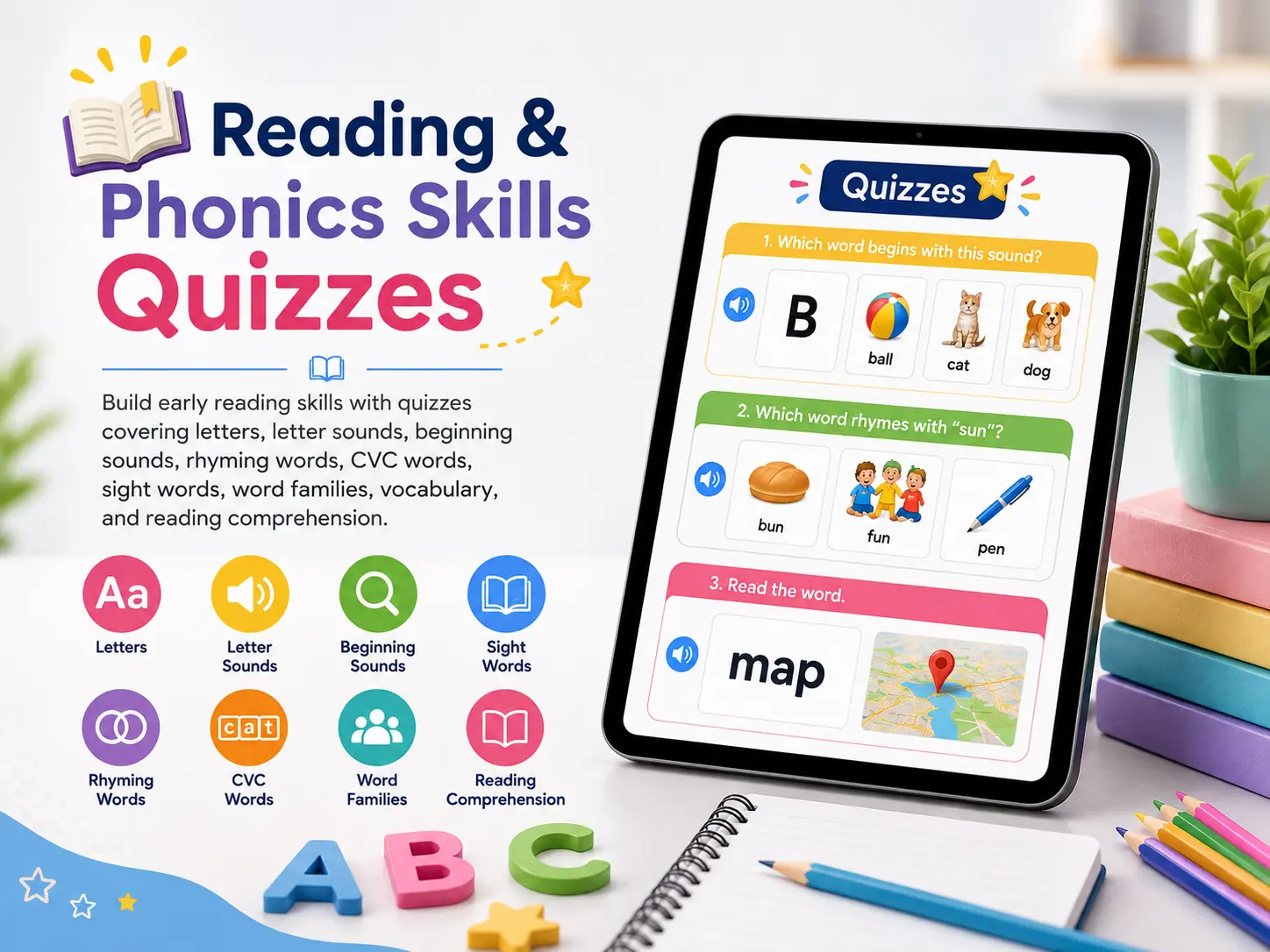
Kindergarten Reading & Phonics Skills
Build early reading skills with quizzes covering letters, letter sounds, beginning sounds, rhyming words, CVC words, sight words, word families, vocabulary, and reading comprehension.
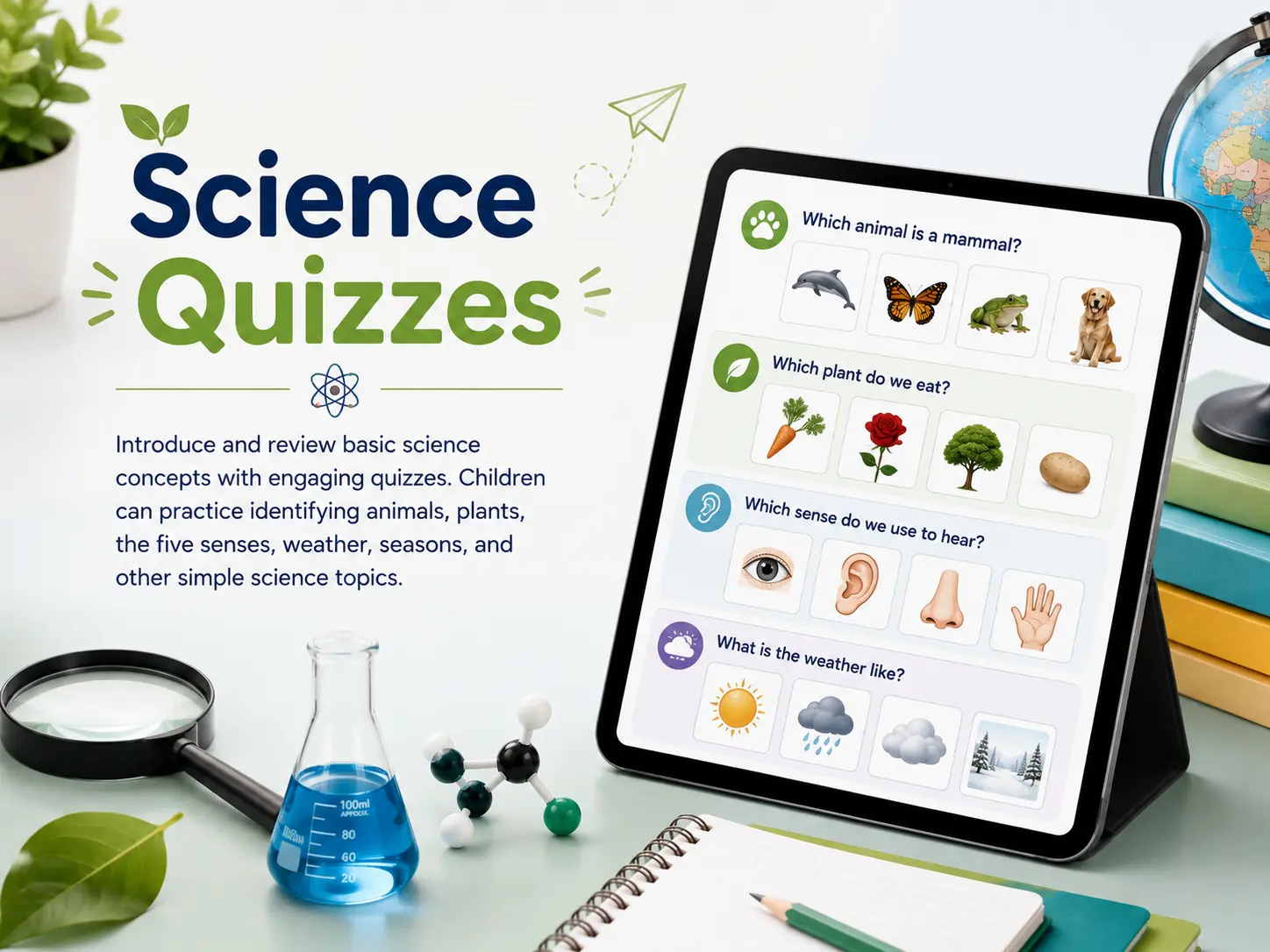
Kindergarten Science Quizzes
Introduce and review basic science concepts with kindergarten science quizzes. Children can practice identifying animals, plants, the five senses, weather, seasons, and other simple science topics through age-appropriate questions.
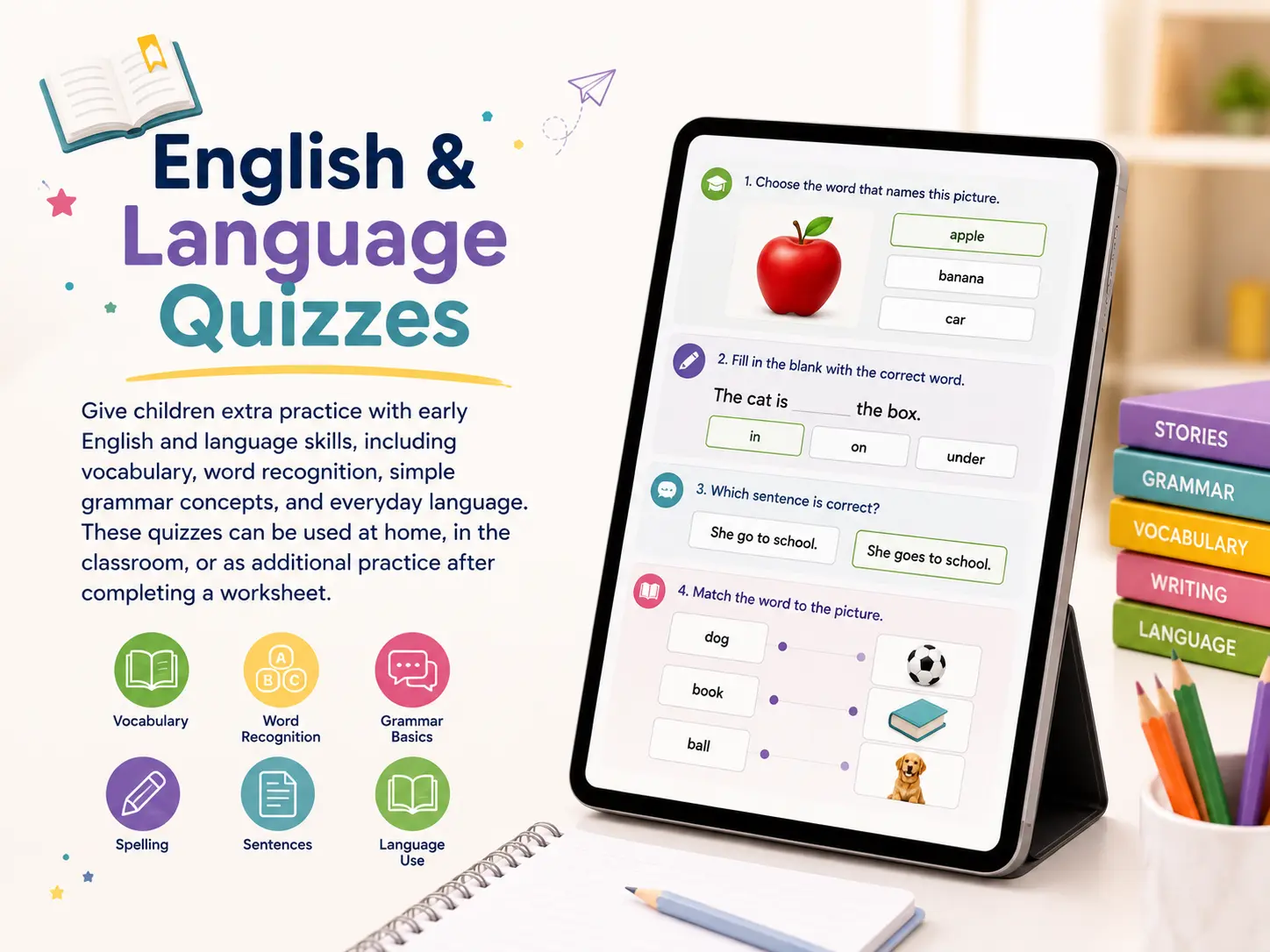
Kindergarten English & Language Quizzes
Give children extra practice with early English and language skills, including vocabulary, word recognition, simple grammar concepts, and everyday language. These quizzes can be used at home, in the classroom, or as additional practice after completing a worksheet.
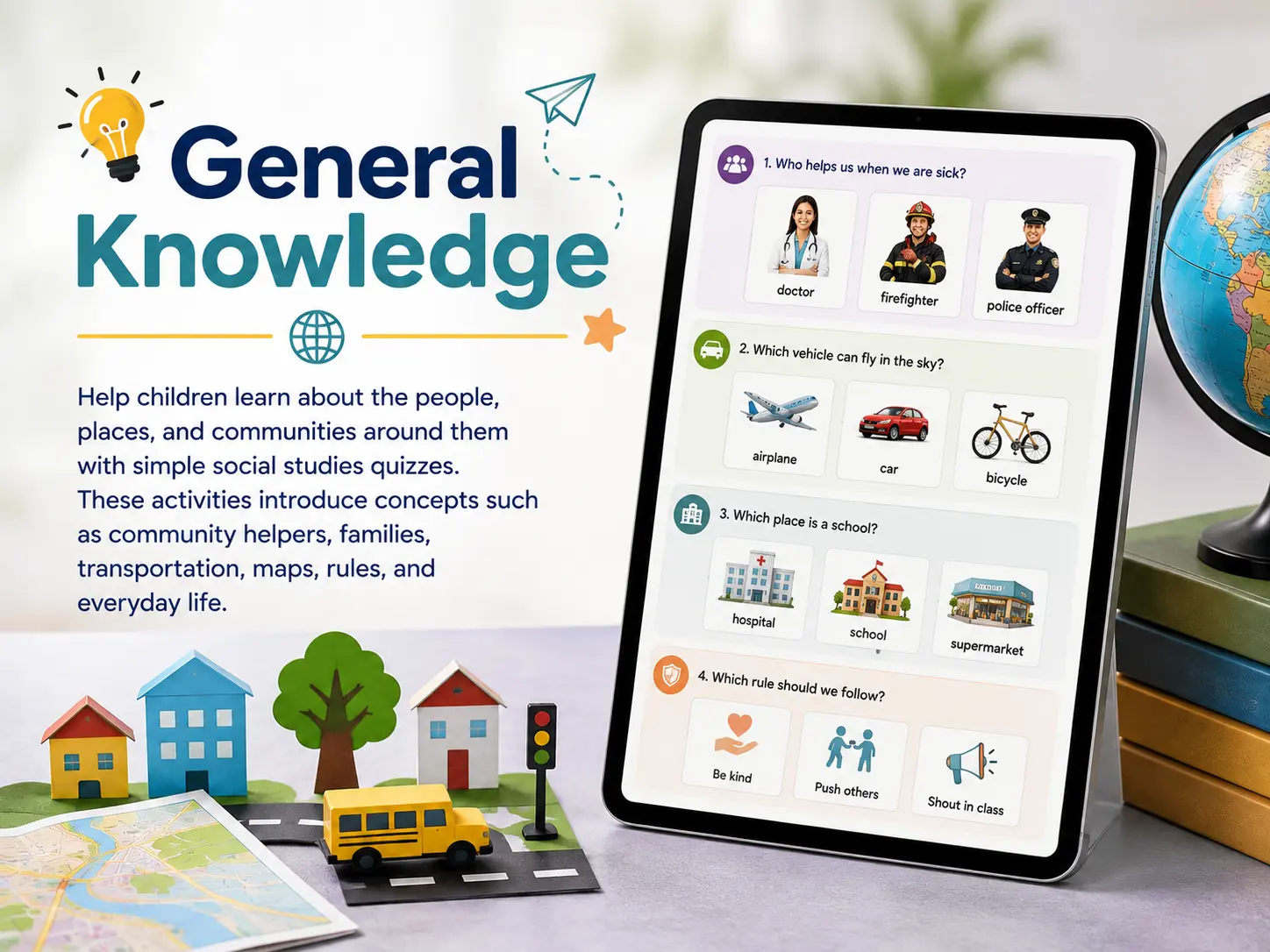
Kindergarten General Knowledge
Help children learn about the people, places, and communities around them with simple kindergarten social studies quizzes. These activities introduce concepts such as community helpers, families, transportation, maps, rules, and everyday life.
Shapes Covered in This Kindergarten Quiz
Children will see and identify a variety of familiar shapes throughout the quiz.
Circle – A round shape with no corners or straight sides.
Square – A four-sided shape with four equal sides and four corners.
Triangle – A shape with three straight sides and three corners.
Rectangle – A four-sided shape with four corners and two longer sides and two shorter sides.
Oval – A curved shape with no corners that is stretched longer in one direction.
Pentagon – A shape with five straight sides and five corners.
Hexagon – A shape with six straight sides and six corners.
Rhombus – A four-sided shape with four equal sides that can look like a diamond when tilted.
Star – A pointed shape that children can recognize by its several tips.
Heart – A familiar shape with two curved bumps at the top and a point at the bottom.
Learn Shapes by Their Sides and Corners
One useful way for children to understand shapes is to look at their sides and corners.
A triangle has 3 sides and 3 corners.
A square has 4 sides and 4 corners.
A pentagon has 5 sides and 5 corners.
A hexagon has 6 sides and 6 corners.
A circle has no corners and no straight sides.
The quiz asks children to use these properties instead of relying only on the shape’s name or appearance.
Square vs. Rectangle
Squares and rectangles can look very similar because both have four corners and four straight sides.
A square has four equal sides.
A rectangle has four corners, but its opposite sides are the same length while the longer and shorter sides are different.
Learning this difference helps children look carefully at a shape instead of choosing an answer just because it has four sides.
Circle vs. Oval
A circle and an oval are both curved shapes with no corners.
The important difference in this quiz is their appearance. A circle is round, while an oval is stretched longer in one direction.
Children practice recognizing this difference and applying it to familiar objects, such as an egg.
Shapes Can Look Different When They Turn
Children may sometimes think that turning a shape makes it a different shape.
This quiz gives them practice looking beyond the position of a shape.
For example, a square can be turned so that it looks like a diamond. A triangle can also be turned sideways. The number of sides and corners remains the same.
This helps children recognize shapes even when they are not standing in the position they normally see.
Shapes in Everyday Objects
Shapes are easier to understand when children can connect them with things they already know.
This quiz uses familiar examples such as:
• Coins and wheels for circles
• Windows and picture frames for rectangles or squares
• Pizza slices for triangles
• Eggs for ovals
• Kites for rhombus shapes
• Honeycomb cells for hexagons
These examples encourage children to look for shapes in the world around them.
3 Levels of Kindergarten Shape Practice
Easy Level:
The 10 Easy questions focus on basic shape recognition.
Children identify common shapes such as circles, squares, triangles, rectangles, ovals, and hearts. They also begin connecting simple shape properties with their names, such as recognizing a triangle by its 3 sides or a square by its 4 equal sides.
Moderate Level:
The 20 Medium questions introduce more shape properties and familiar examples.
Children practice identifying pentagons, hexagons, rhombuses, and other shapes. They also compare shapes by sides and corners and identify shapes found in everyday objects.
Advanced Level:
The 30 Advanced questions require more careful thinking.
Children compare shapes, count sides and corners, recognize shapes after they are turned, distinguish circles from ovals, identify patterns based on the number of sides, and connect familiar objects with their matching shapes.
The questions become more challenging without requiring children to move beyond basic shape reasoning.
How to Use This Kindergarten Shapes Online Quiz
1. Read the question carefully.
2. Look closely at the shape or visual shown.
3. Think about its sides, corners, and overall appearance.
4. Choose the answer that you think is correct.
5. Continue through the questions.
6. Check your result when you finish.
7. Try the quiz again to practice the shapes you found difficult.
Make Shape Practice More Meaningful
After completing the quiz, look for shapes around the house or classroom.
Ask your child questions such as:
“What shape is the clock?”
“How many corners does this square have?”
“Can you find something shaped like a rectangle?”
“Can you find something that looks like an oval?”
“Which object has more sides?”
“What happens when you turn this shape?”
These simple activities help children connect the shapes they see in a quiz with the shapes they see every day.
