| Kindergarten Worksheets |
|---|
| Learning Letters |
| Tracing Letters |
| Tracing Numbers |
Number Tracing Worksheets 61–70 (Free Printable PDF)
Children who arrive at the sixties have done something genuinely impressive. They have written their way through six full decades, navigating single digits, irregular teens, and five rounds of compound number words. These number tracing worksheets 61–70 reward that progress with a tens digit that feels distinctly different from everything that came before — the “6”, a fully closed curved digit that moves in a single sweeping motion.
Paired in this sample with the sharp, angular “7”, the number 67 worksheet puts two completely opposite stroke personalities side by side — and that contrast is exactly what makes this set so effective for developing well-rounded pencil control.
Number Tracing Worksheets 61–70 Choose a Worksheet
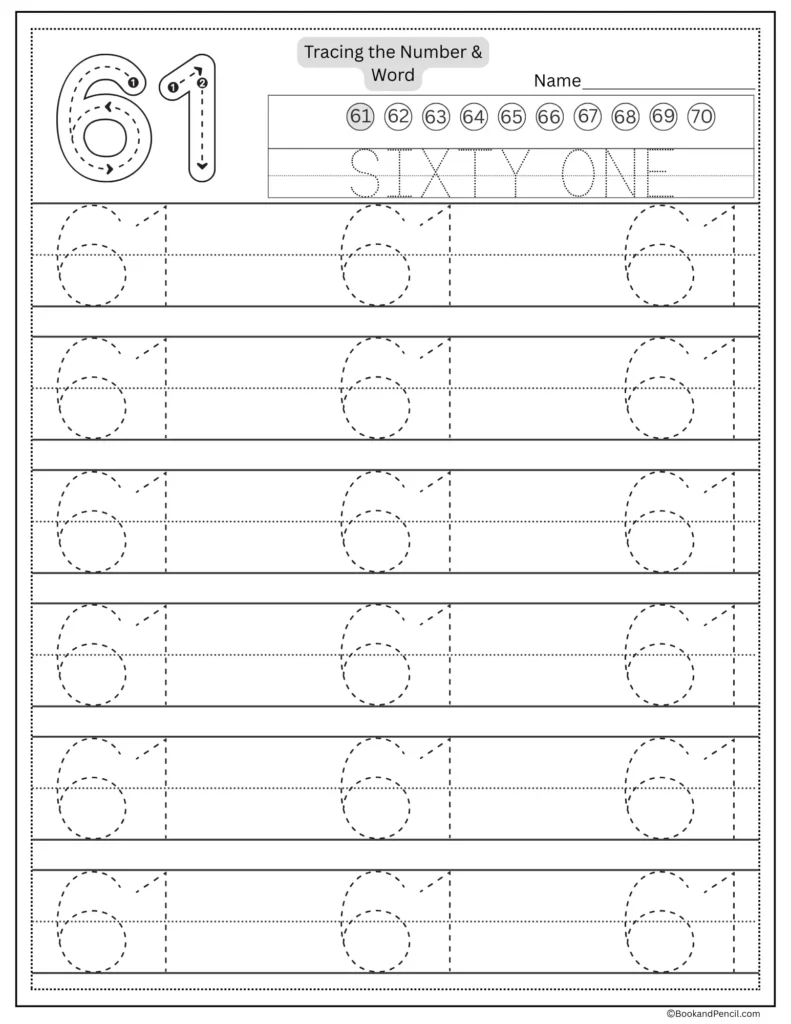
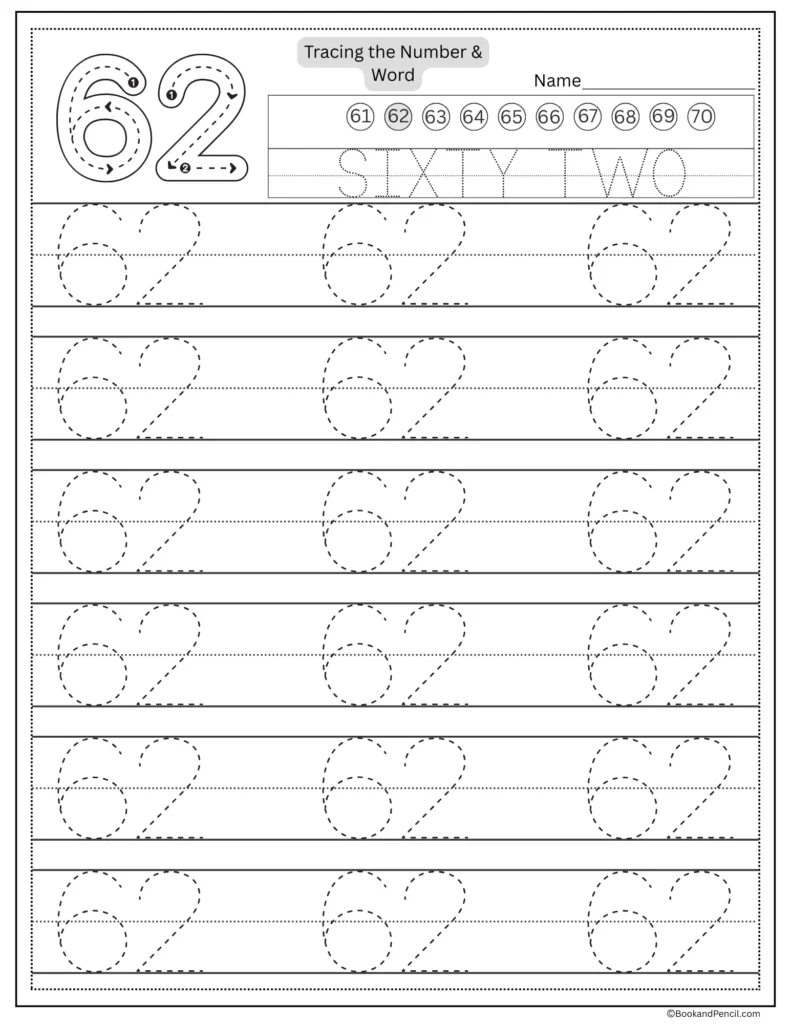
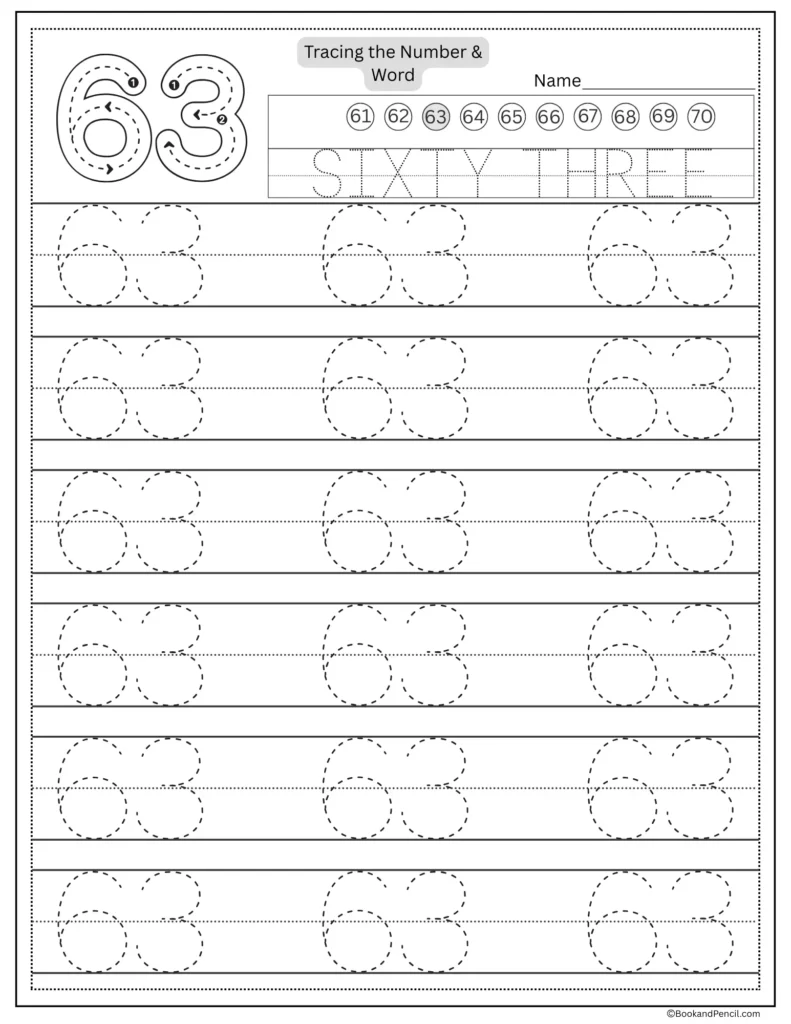
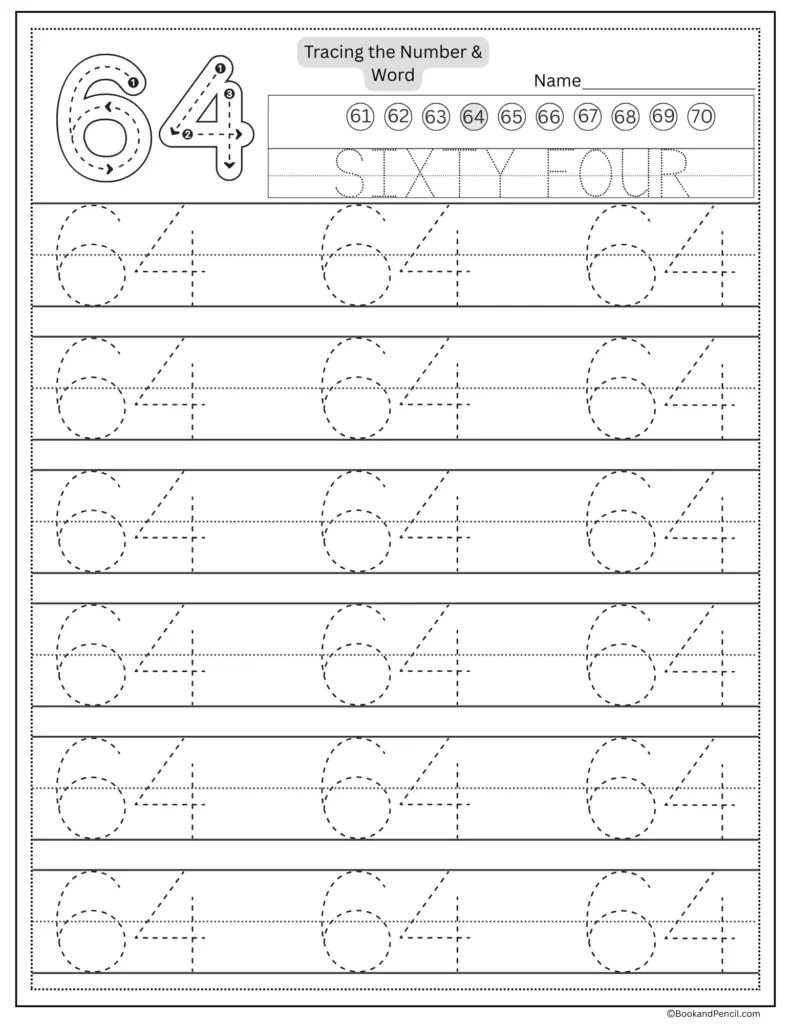
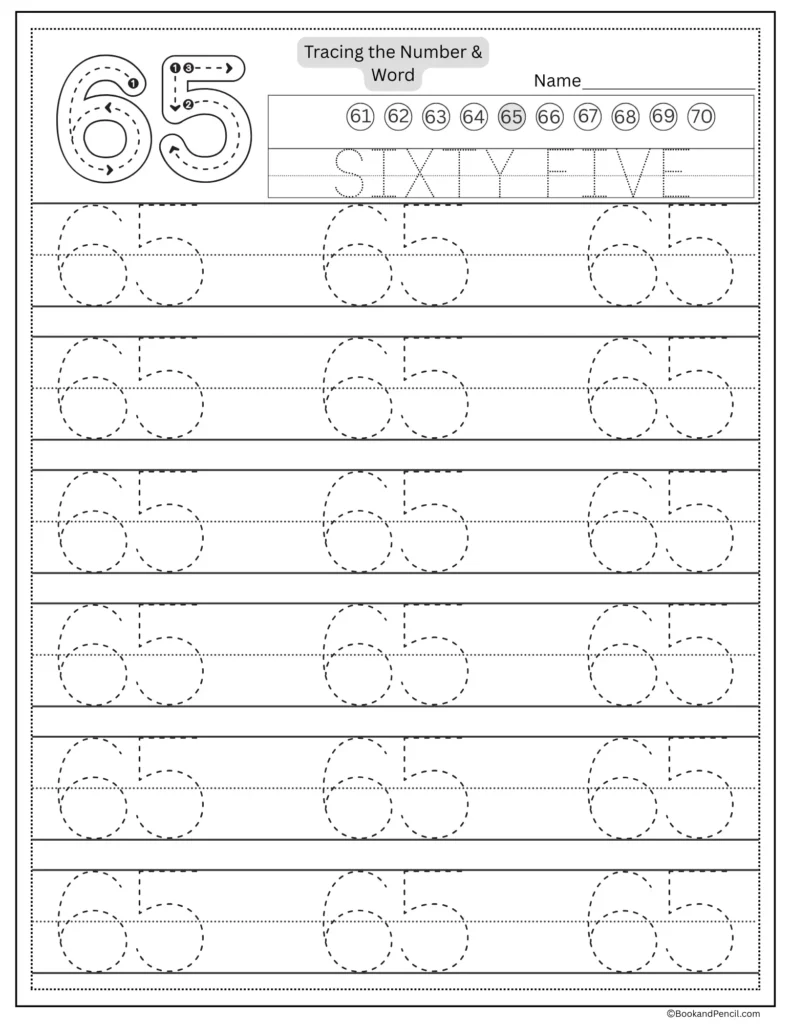
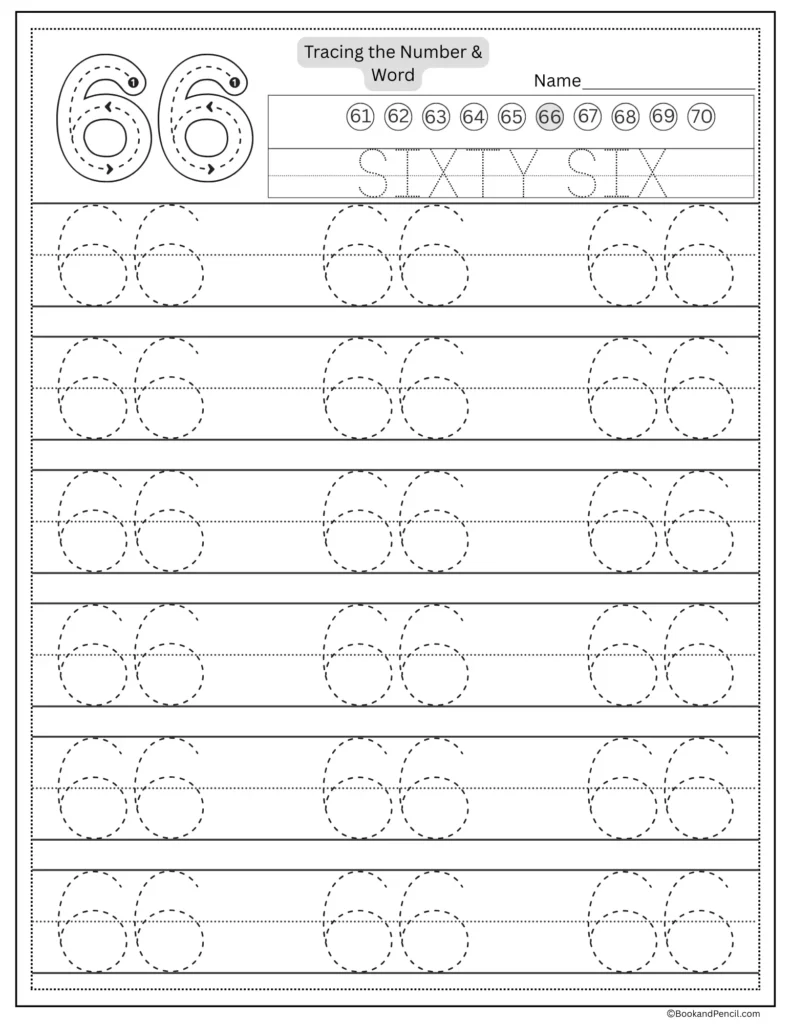
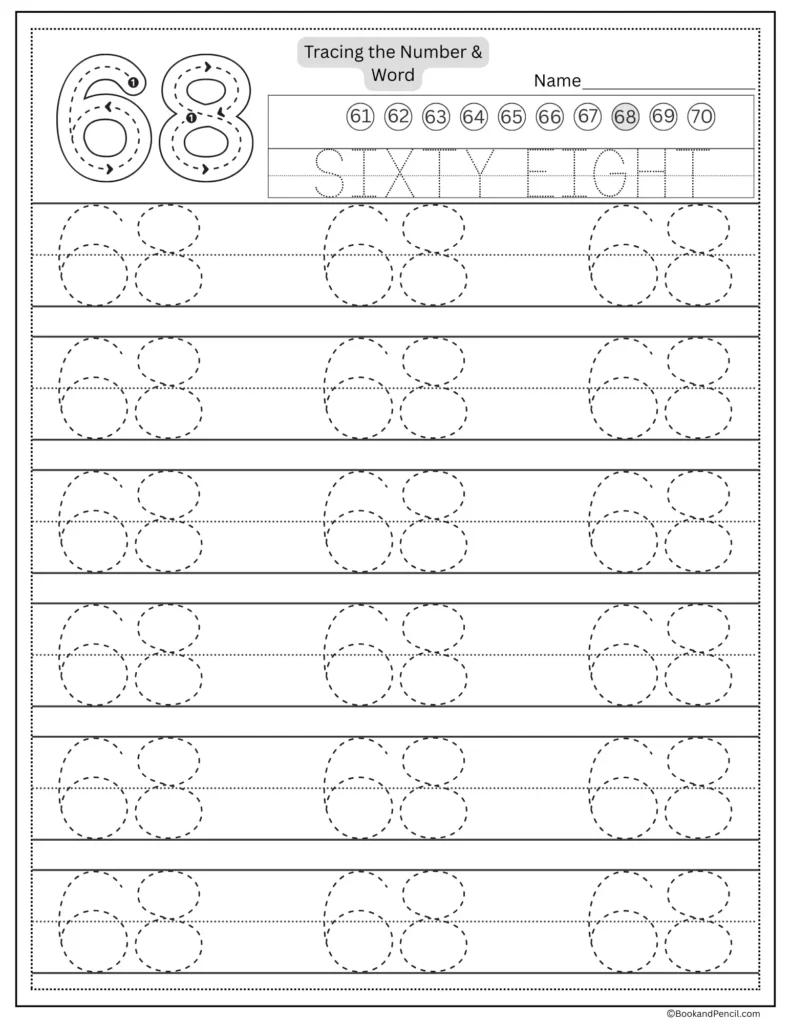
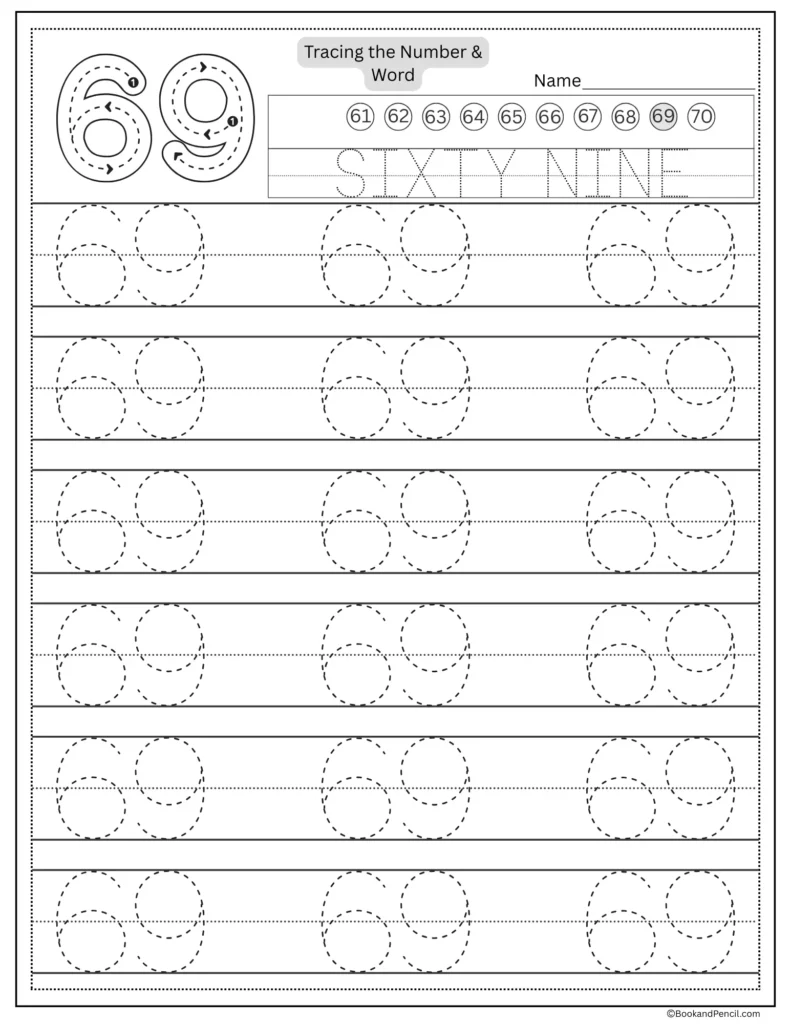
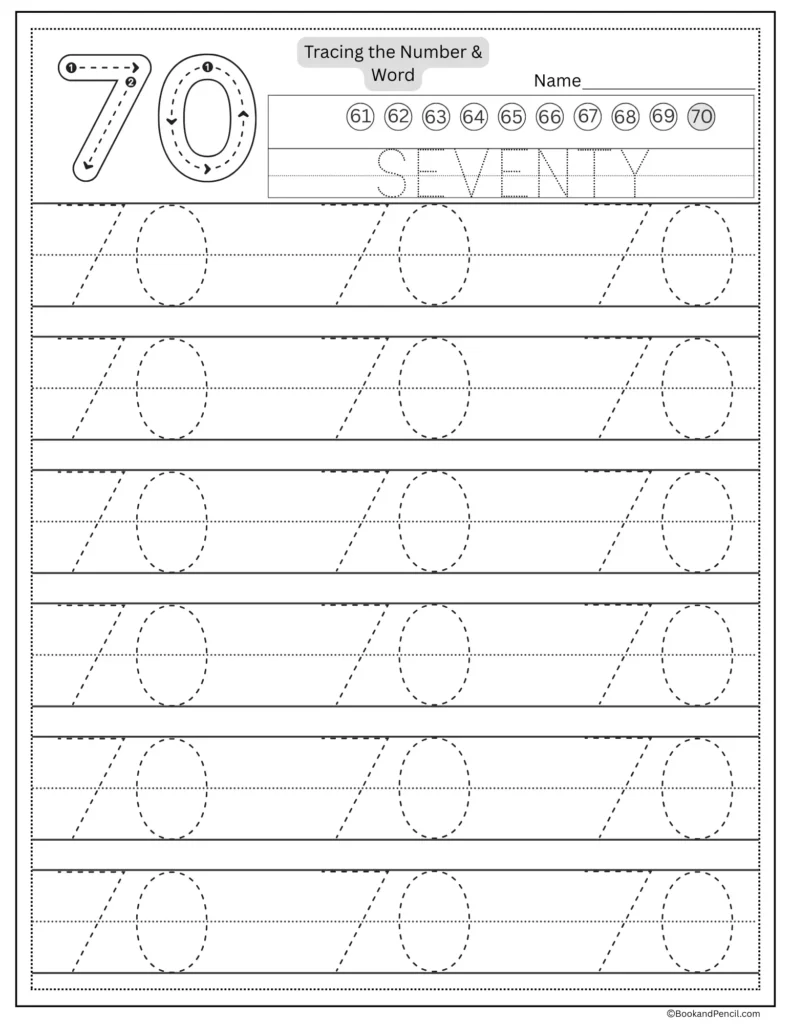
What's Inside Each Worksheet?
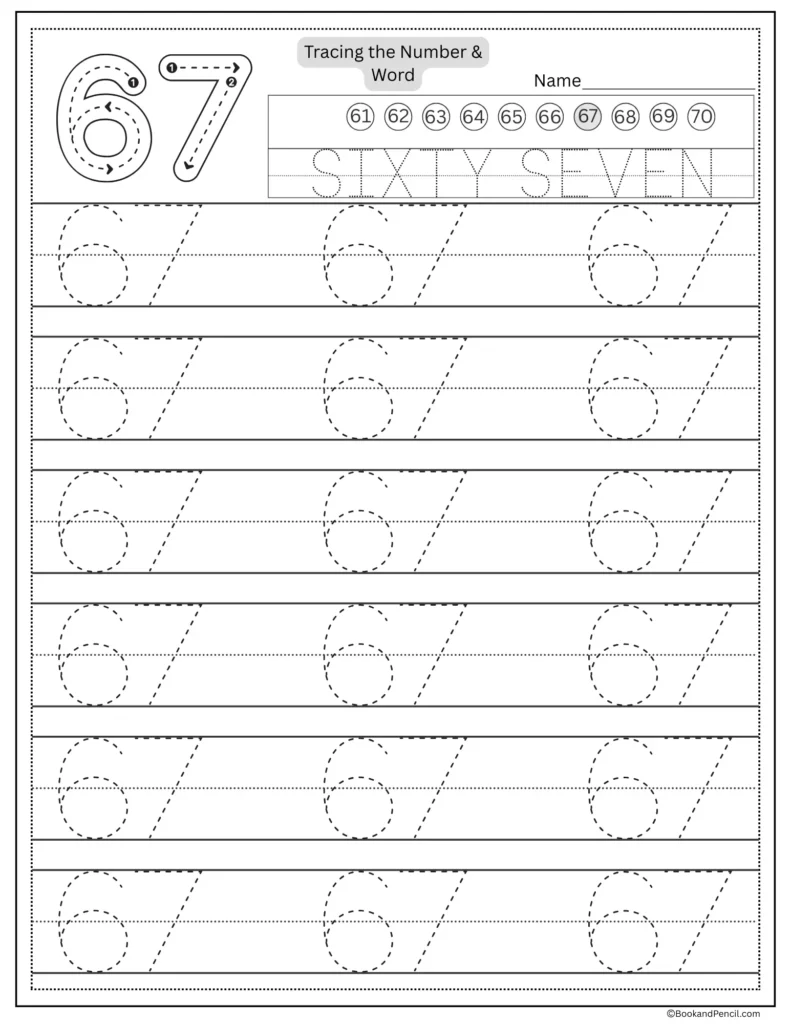
Here’s a precise breakdown using the number 67 worksheet:
① Single-Stroke Spiral for “6” The display “6” in the top-left carries just one arrow — ① — but that single stroke is one of the most travel-intensive movements in the entire digit set. It begins at the top, curves left and downward, sweeps into a closed loop at the base, and finishes inside the belly of the number. There are no lifts, no direction reversals, no straight segments — just one long, continuous curve that demands smooth and steady pencil pressure from start to finish.
② Two-Stroke Slant Guide for “7” Right beside it, the “7” uses two arrows — 1 and 2. Arrow ① moves horizontally across the top from left to right, and Arrow ② takes a clean diagonal drop down to the lower left. The “7” is one of the sharpest, most angular digits in the set — making its pairing with the fully curved “6” a deliberate contrast that teaches children to switch between movement styles fluidly.
③ Number Strip: 61 Through 70 The horizontal bar at the top displays the complete range 61 to 70, with 67 clearly positioned in the second half of the strip. Children can see that they are approaching the close of another decade, building the counting intuition that 70 is just three steps ahead.
④ Word Tracing: “SIXTY SEVEN” Children trace the compound word SIXTY SEVEN across the full dotted line beneath the number strip. “Sixty” introduces a word where the “x” creates a visually interesting letter among more familiar ones — and “Seven” is one of the longer ones-digit words children have encountered, giving this word-tracing row a satisfying length and rhythm.
⑤ Name Field The Name____ line at the top right keeps each completed worksheet identifiable — useful for tracking progress across the full 61–70 set.
⑥ Six Practice Rows with 18 Repetitions Six double-lined rows fill the page, each containing three side-by-side “67” tracings. The solid baseline and dotted midline ensure both the rounded “6” and the tall “7” sit consistently at the correct height — an important detail because these two digits naturally want to occupy different amounts of vertical space.
What the Sixties Teach That Earlier Sets Couldn't
The “6” is the first fully enclosed curved digit to appear as a tens digit in this entire series. While the “3” curved and the “5” mixed curves with straight lines, the “6” closes back on itself — requiring children to control the endpoint of a long stroke so it lands precisely inside the loop. That skill — knowing when and where to stop a continuous stroke — is one of the most transferable handwriting abilities a child can develop.
Meanwhile, the “7” provides the counterpoint. Its two strokes are entirely straight, requiring none of the curve-management of the “6” — but demanding precise angle control on the diagonal drop. Together in the 61–70 set, these two digits build a kind of handwriting agility that no previous decade has demanded in the same way.
- The “6” develops continuous-curve stroke control — a foundational handwriting skill
- The “7” sharpens diagonal line precision — directly useful for letters like V, W, and Y
- “SIXTY SEVEN” is one of the longest word-tracing entries in the series
- The number strip reinforces end-of-decade awareness as 70 comes into view
- 18 repetitions per worksheet build stroke automaticity for both digit types