| Kindergarten Worksheets |
|---|
| Learning Letters |
| Tracing Letters |
| Tracing Numbers |
Number Tracing Worksheets 41–50 (Free Printable PDF)
Crossing into the forties feels like a genuine achievement. Children who reach this set have already navigated single digits, irregular teens, and two full decades of compound numbers. These number tracing worksheets 41–50 meet them at that milestone with something new to master — a tens digit that itself requires three careful strokes every single time it appears.
The “4” is now the anchor of an entire decade, no longer just a guest appearance inside one or two numbers. From 41 all the way to 49, it opens every numeral — making this the set where children either fully own this digit or fall back on bad habits. These worksheets make sure it’s the former.
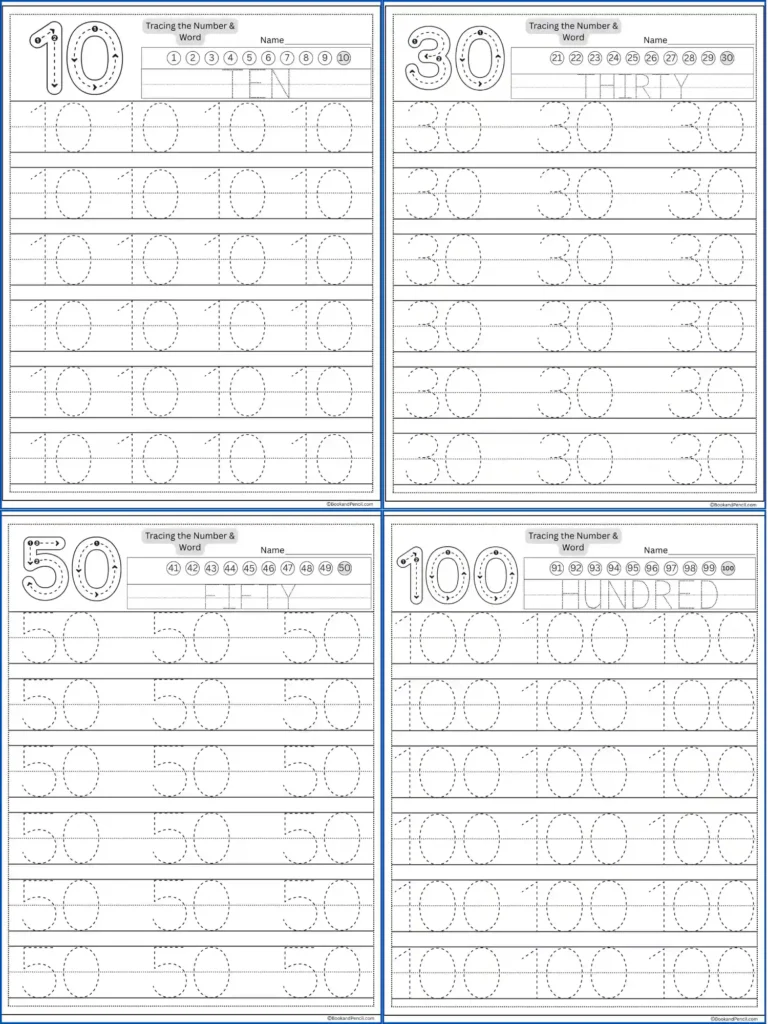
Number Tracing Worksheets 41–50 Choose a Worksheet
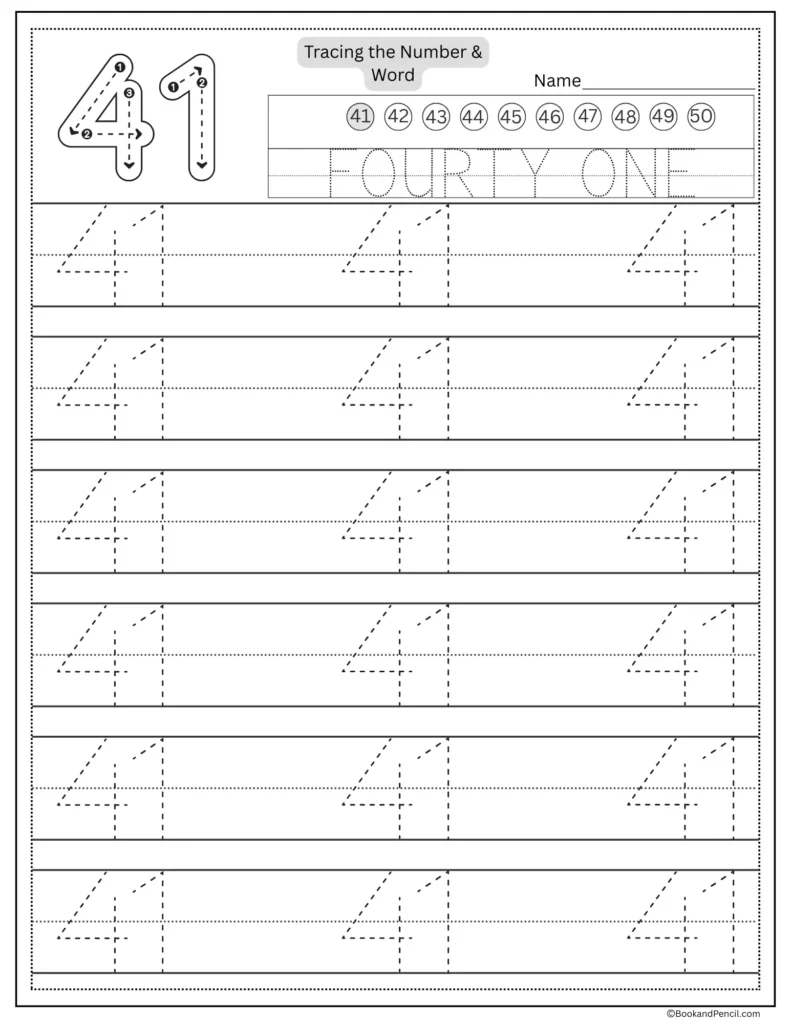
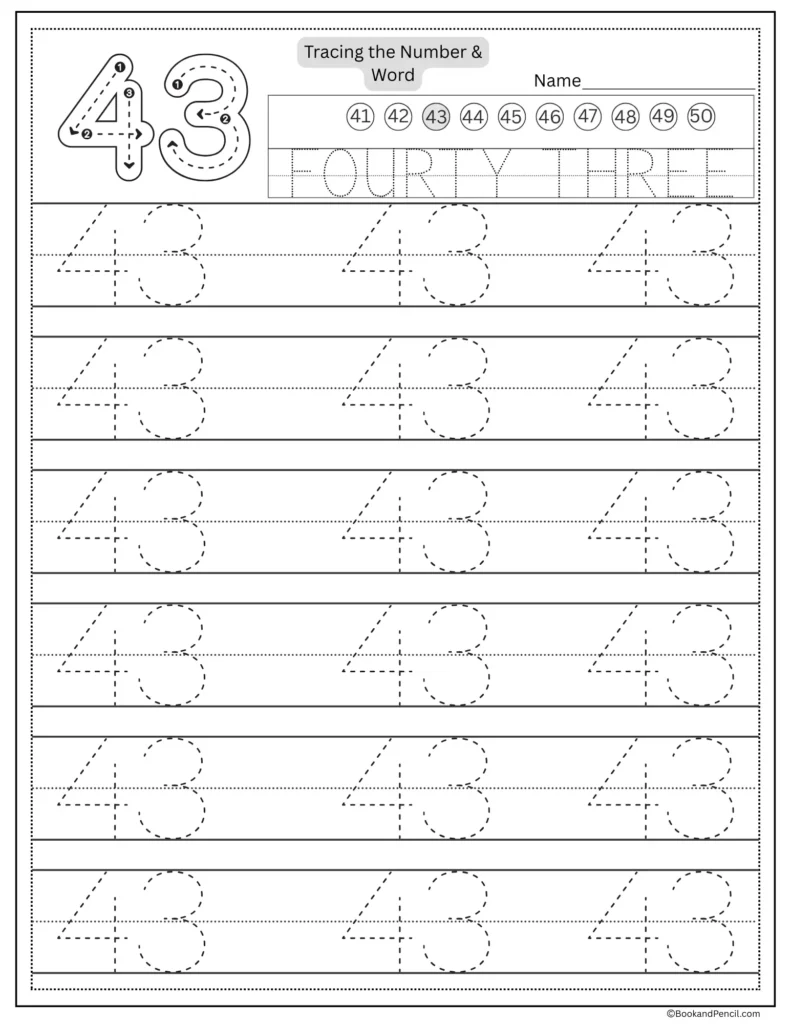
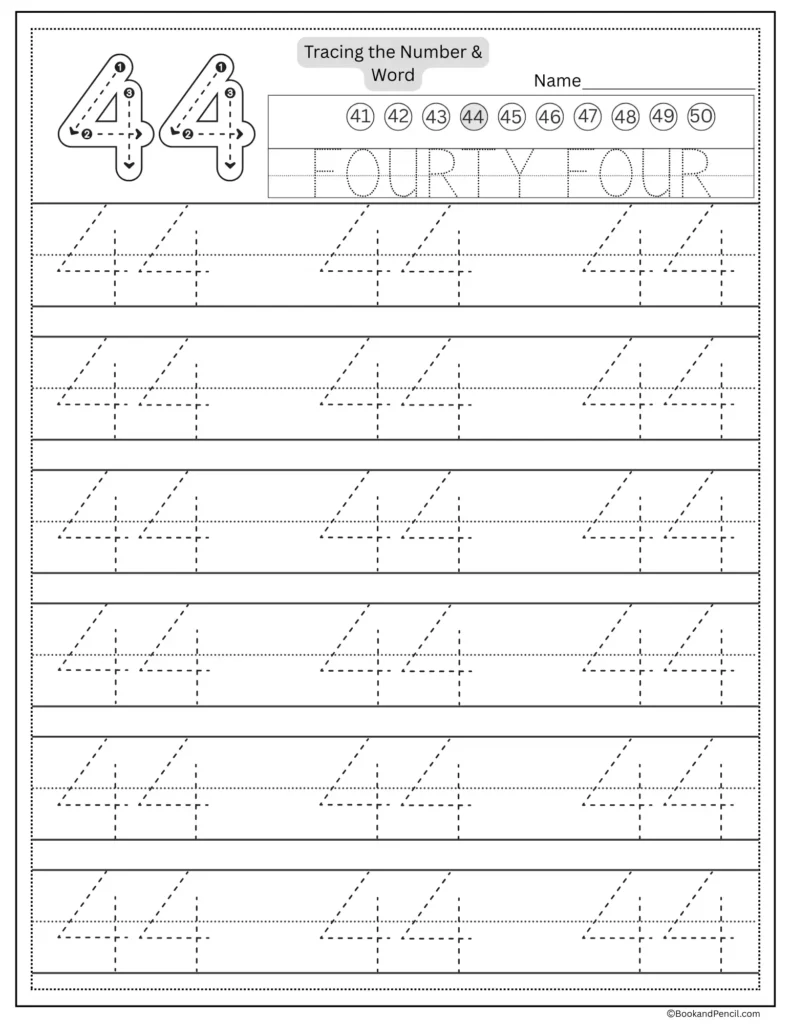
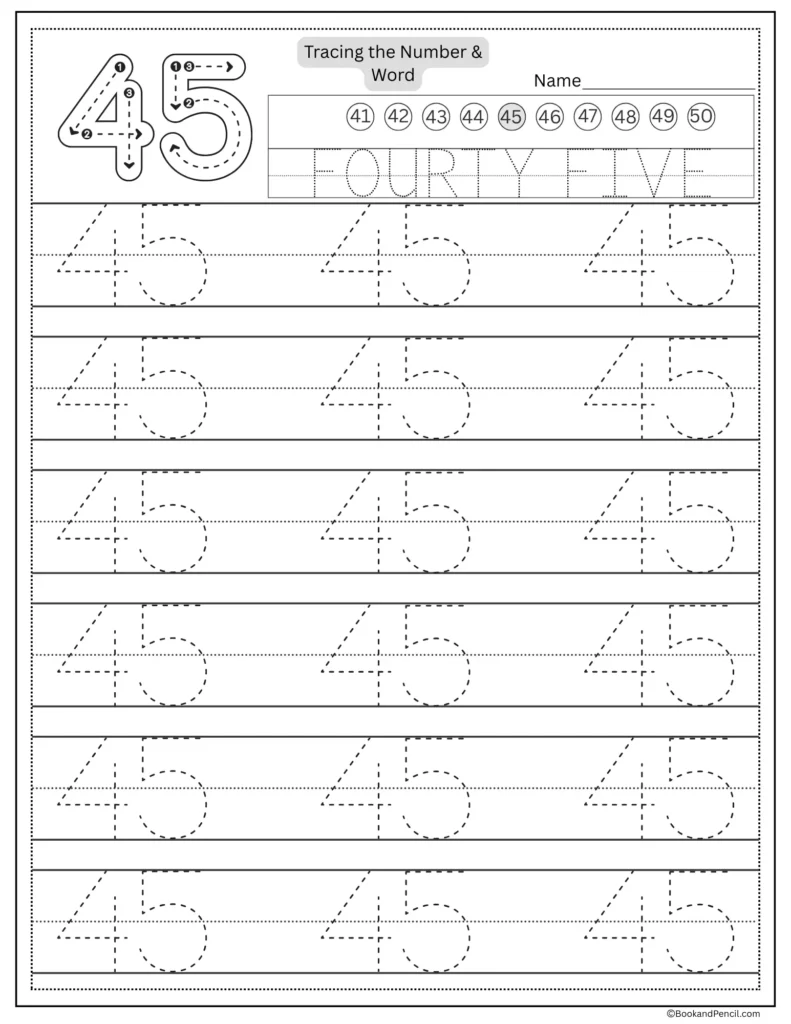
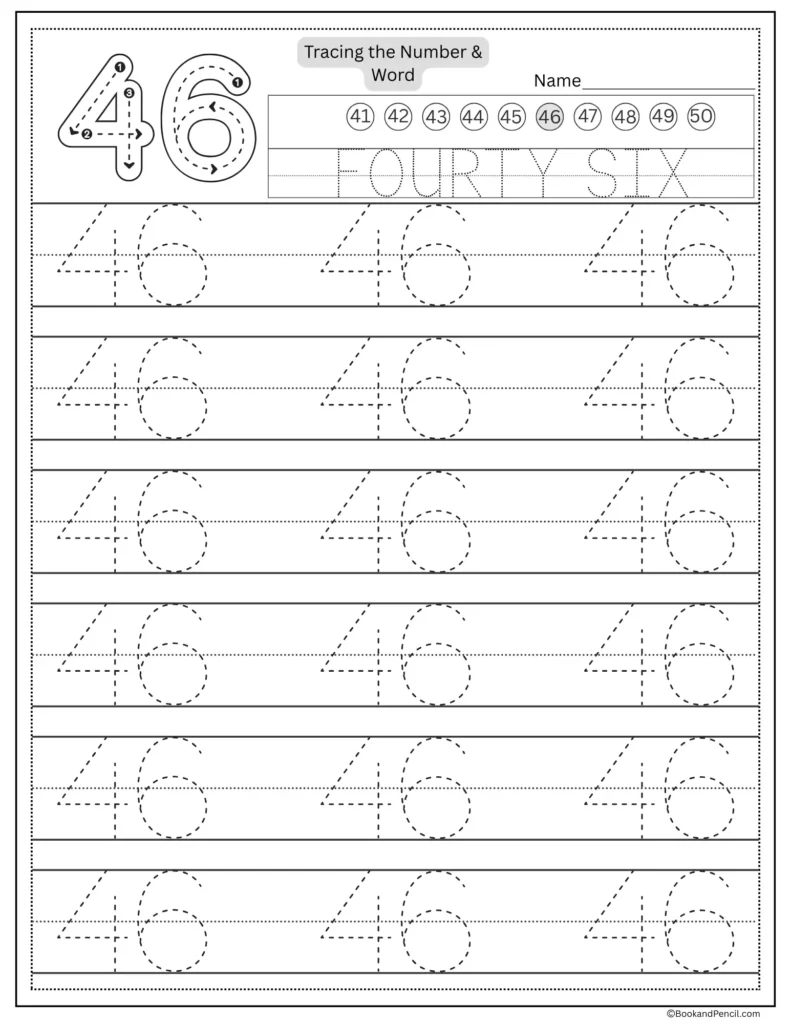
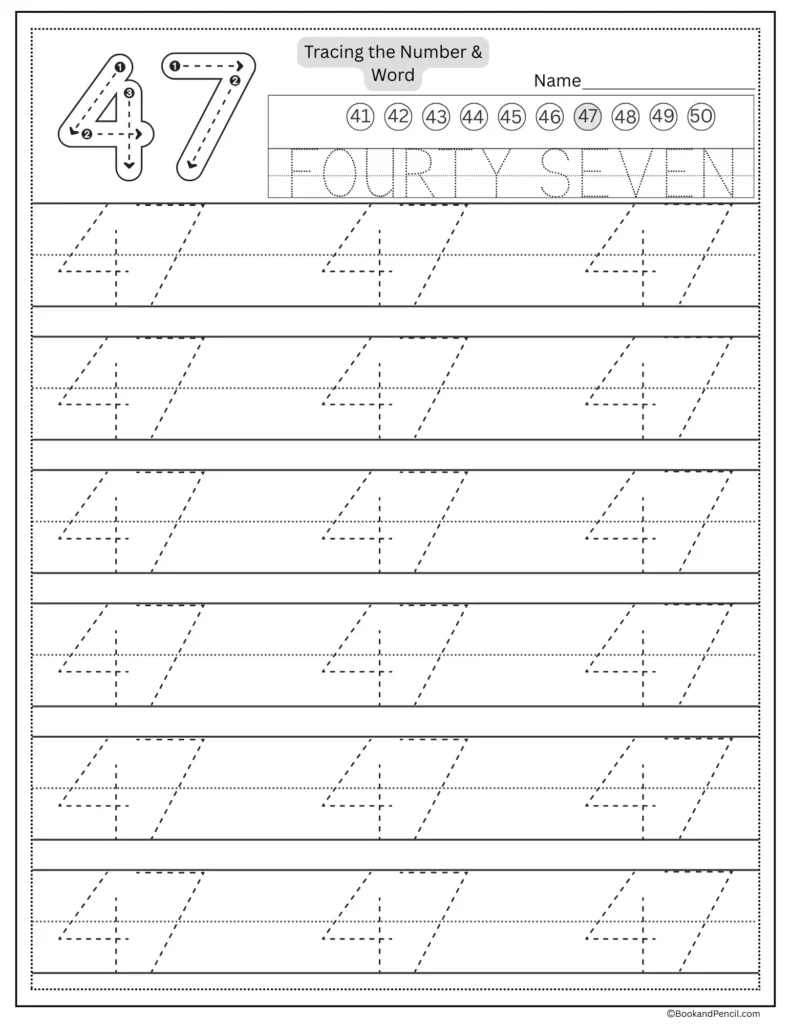
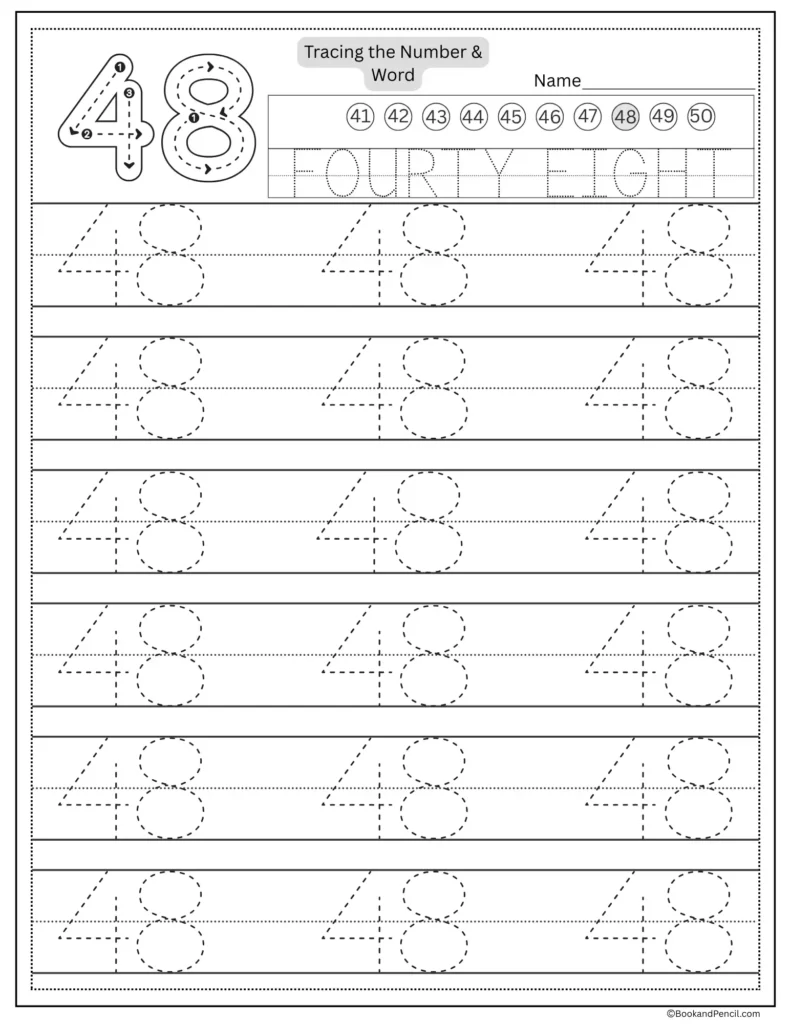
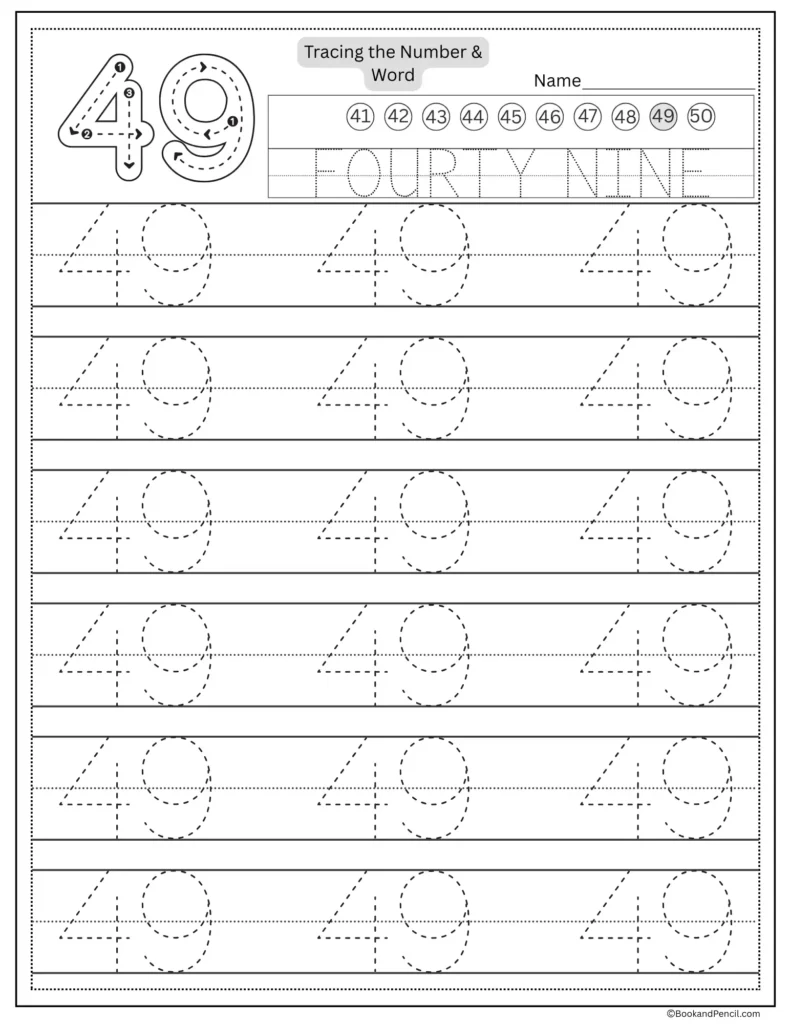
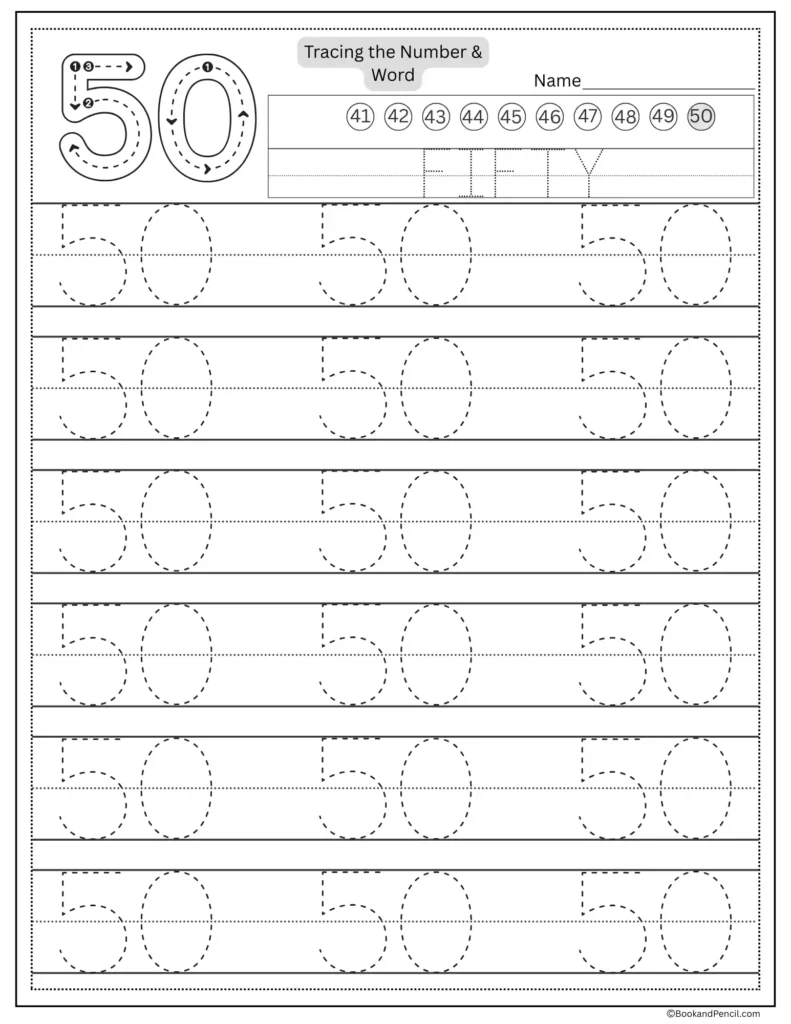
What's Inside Each Worksheet?
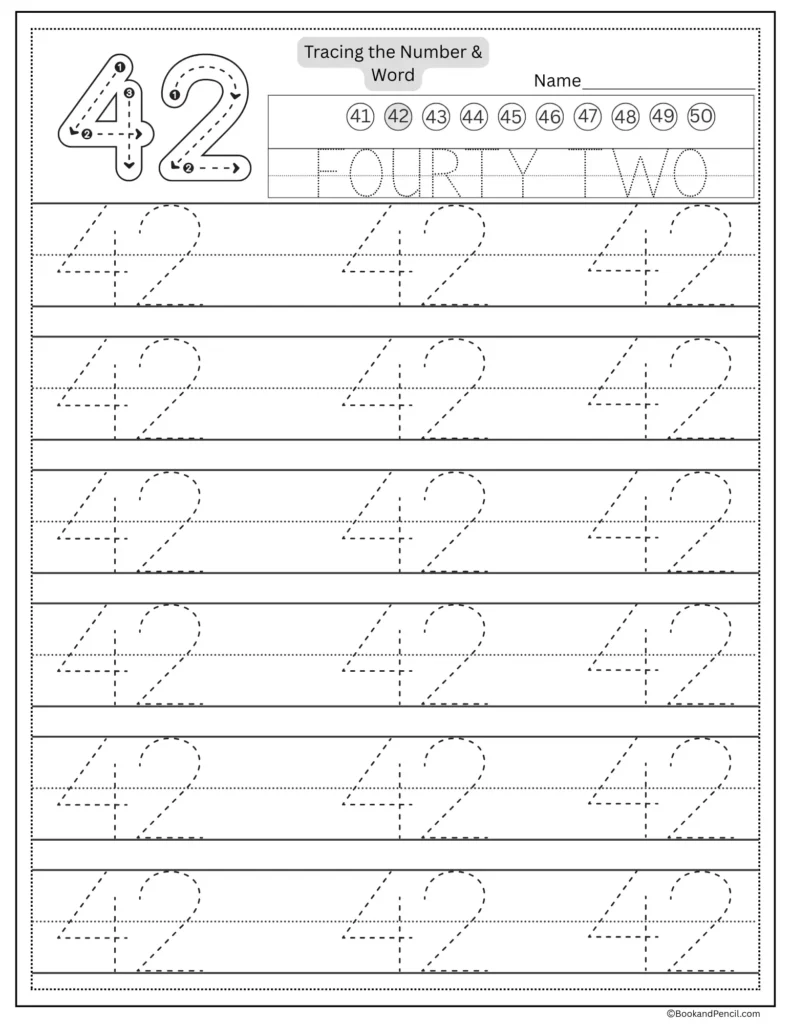
The number 42 worksheet reveals exactly how this set is built:
① Three-Stroke Guide for “4” The large display “4” in the top-left corner carries three directional arrows — ①, ②, and ③. Arrow ① pulls diagonally down-left, Arrow ② swings the horizontal bar across, and Arrow ③ drops straight down to finish. Children who practiced “4” as the ones digit in the 31–40 set now face it as the leading digit — which means they must execute all three strokes cleanly before their pencil even reaches the second number.
② Two-Stroke Guide for “2” The display “2” beside it uses two arrows — ① and ②. Arrow ① curves from the top through the body of the digit, and Arrow ② sweeps the flat base stroke left to right. The pairing of a three-stroke “4” with a two-stroke “2” gives children a real lesson in how differently two digits can behave side by side — and why stroke order matters for each one individually.
③ Number Strip: 41 Through 50 The horizontal number bar at the top displays the full range 41 to 50, with each number clearly circled. Children can immediately see the complete picture of this decade — from where they start (41) to where it ends (50), a number that introduces the perfectly round close of another ten.
④ Word Tracing: “FORTY TWO” Beneath the number strip, the dotted word FORTY TWO spans the full width of the tracing line. This is the first set where the word “FORTY” appears as part of a compound name rather than standing alone (as it did at the end of the 31–40 set). Children now practice building “Forty-” as a prefix — a pattern that carries them through every number in this decade.
⑤ Name Field The Name____ line at the top right keeps worksheets organized whether used at home or in a classroom setting.
⑥ Six Full Rows of Tracing Practice The body of each worksheet contains six double-lined rows, each holding three repetitions of the target number — totaling 18 complete writing attempts per page. The solid baseline and dotted midline keep numbers anchored at the correct height, training consistent proportion across both digits.
Why This Decade Demands a Different Kind of Focus
In earlier ranges, the tens digit rotated — “2” for twenty, “3” for thirty, “4” for forty. Here, children spend an entire set writing “4” as their opening move, row after row. That sustained repetition does something earlier sets couldn’t: it builds automatic recall of a complex digit through genuine overlearning.
By the time a child finishes the 41–50 worksheets, writing “4” should feel no different than writing “1” or “0” — instant, confident, and correct.
- The “4” becomes a reflex, not a calculation
- The ones digit (1 through 9 plus 0) cycles through every possible shape, offering comprehensive revision
- “Forty-” as a spoken and written prefix reinforces how decades are named and structured
- Number 50 introduces children to their second perfectly round decade-close after 40
- Writing stamina grows naturally through consistent daily practice at this level