| Kindergarten Worksheets |
|---|
| Learning Letters |
| Tracing Letters |
| Tracing Numbers |
Number Tracing Worksheets 71– 80 (Free Printable PDF)
Speed. That is what the seventies are really about. By this point in the 1–100 journey, children have encountered every major stroke type — single curves, multi-stroke angles, continuous loops, and mixed movements. These number tracing worksheets 71–80 introduce a decade whose tens digit is arguably the quickest to write in the entire series — the “7” — and pair it with the full range of ones digits one final time before the series enters its final stretch.
This is the set where writing starts to feel genuinely fast and fluent, and where children begin to experience something new: the satisfaction of keeping up with their own pencil.
Number Tracing Worksheets 51–60 Choose a Worksheet
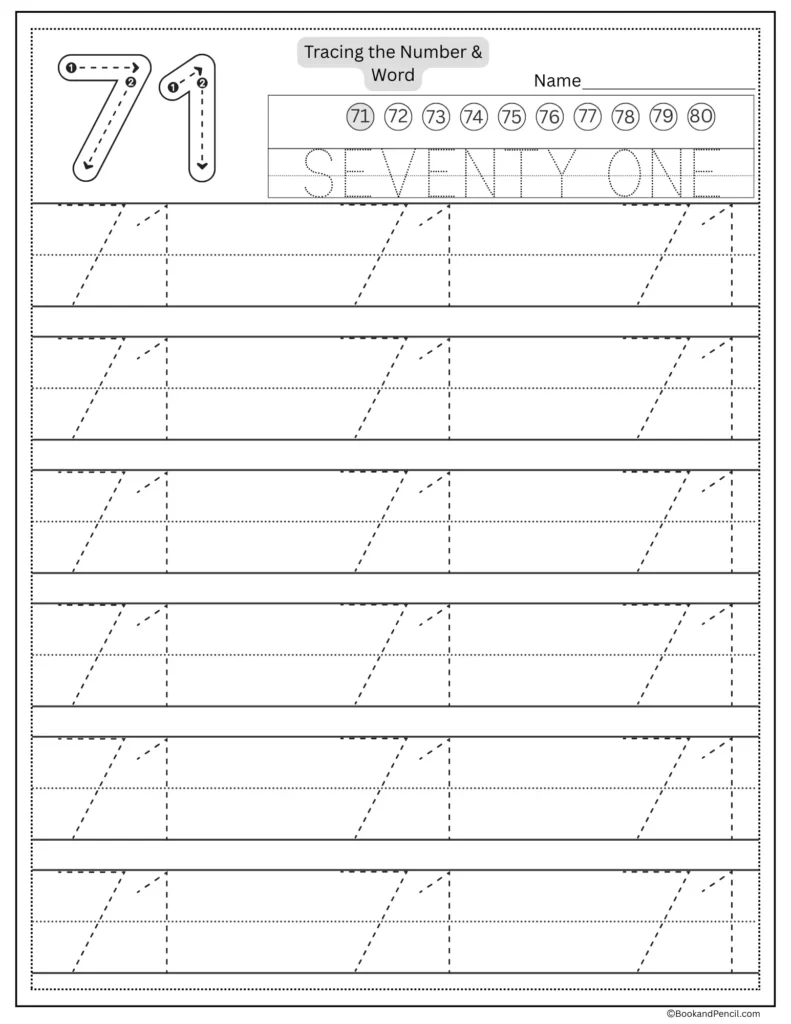
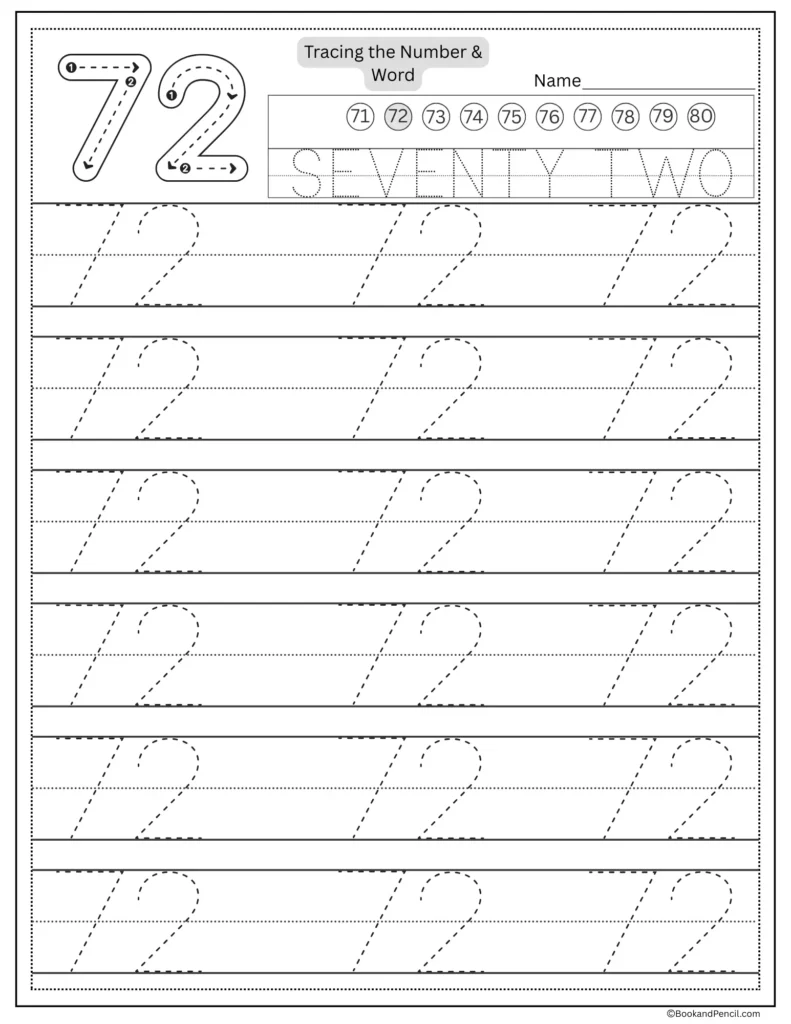
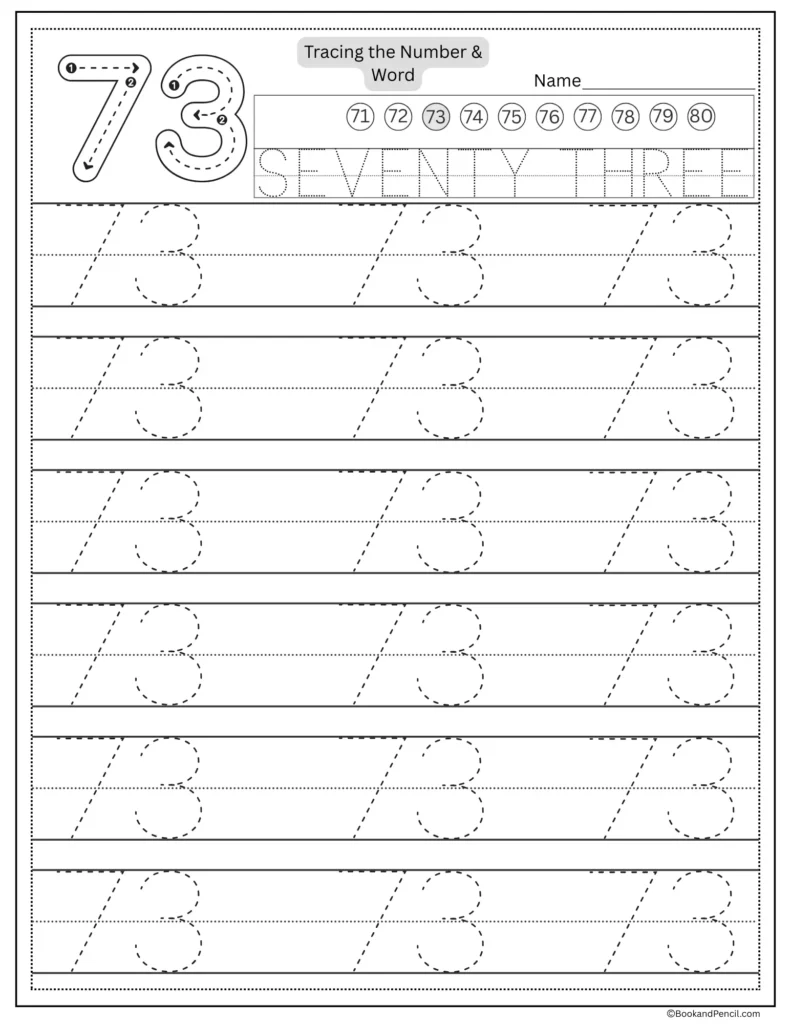
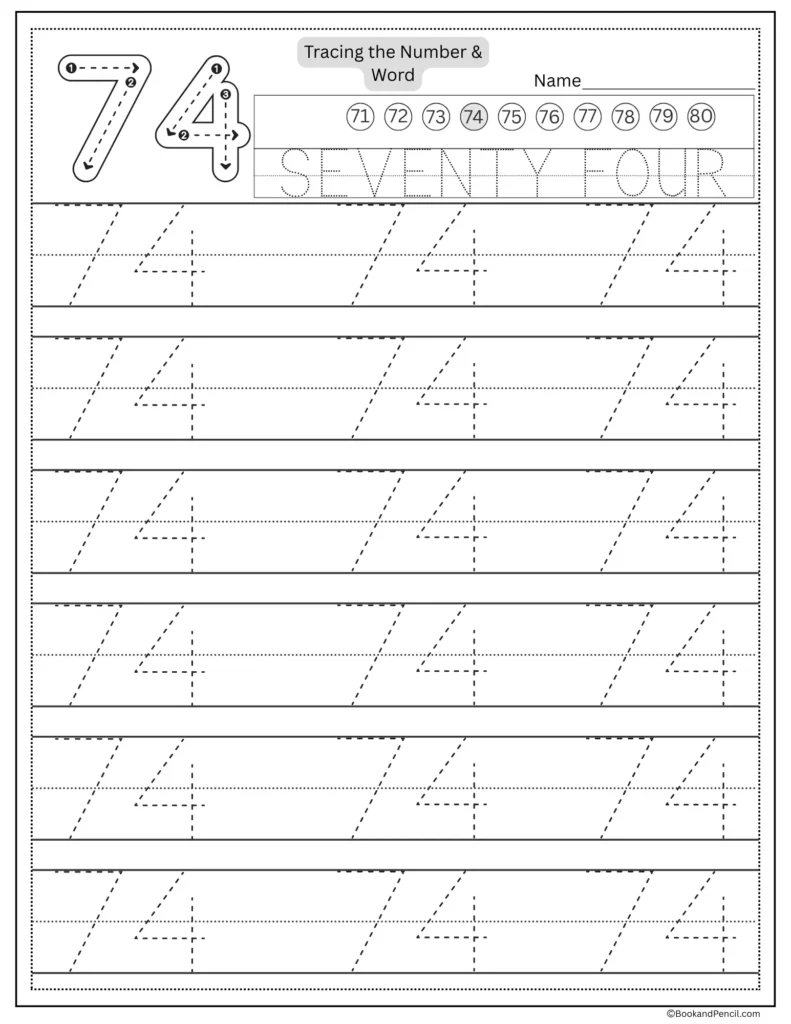
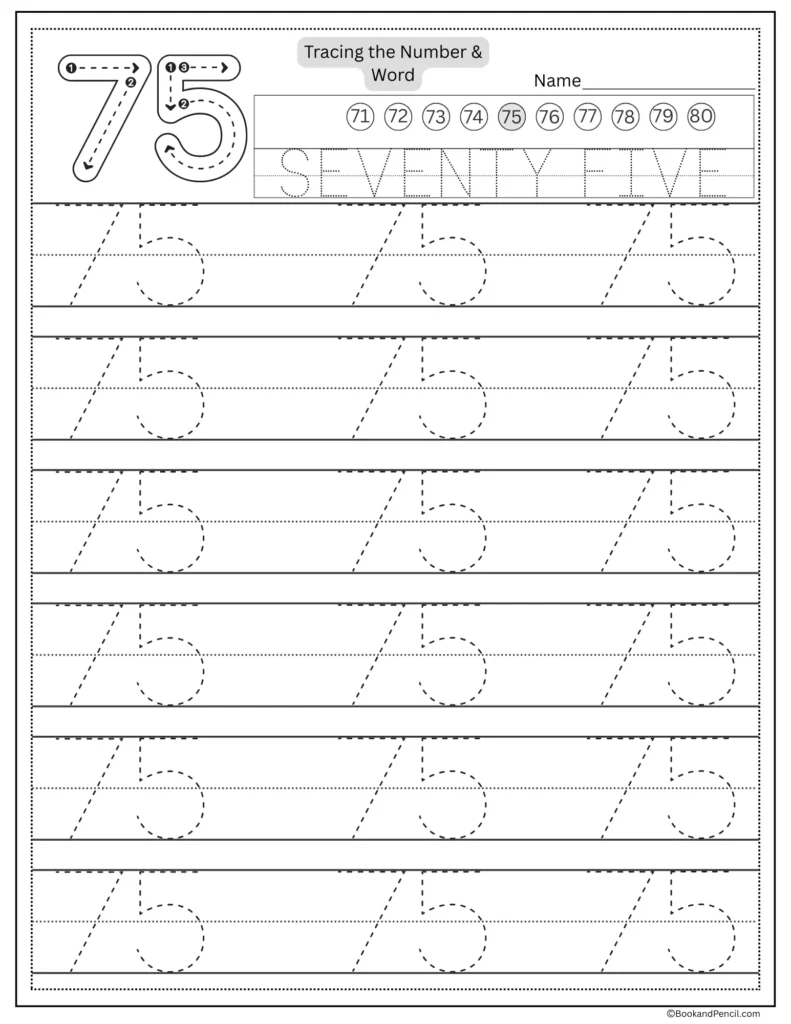
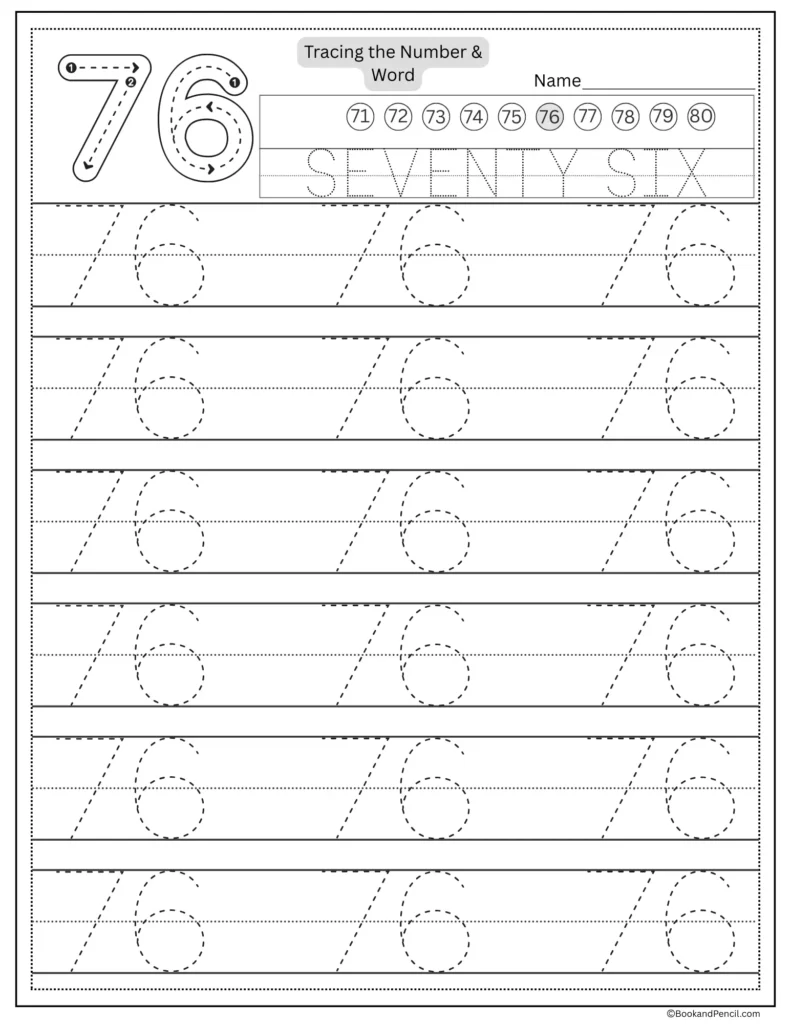
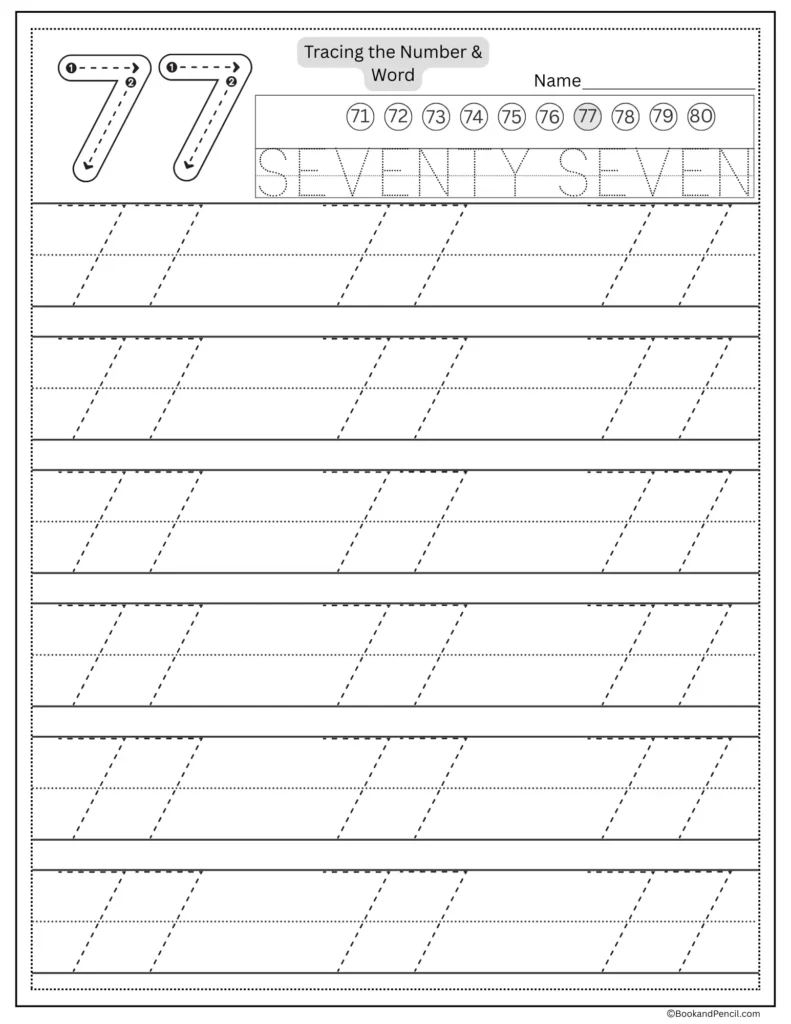
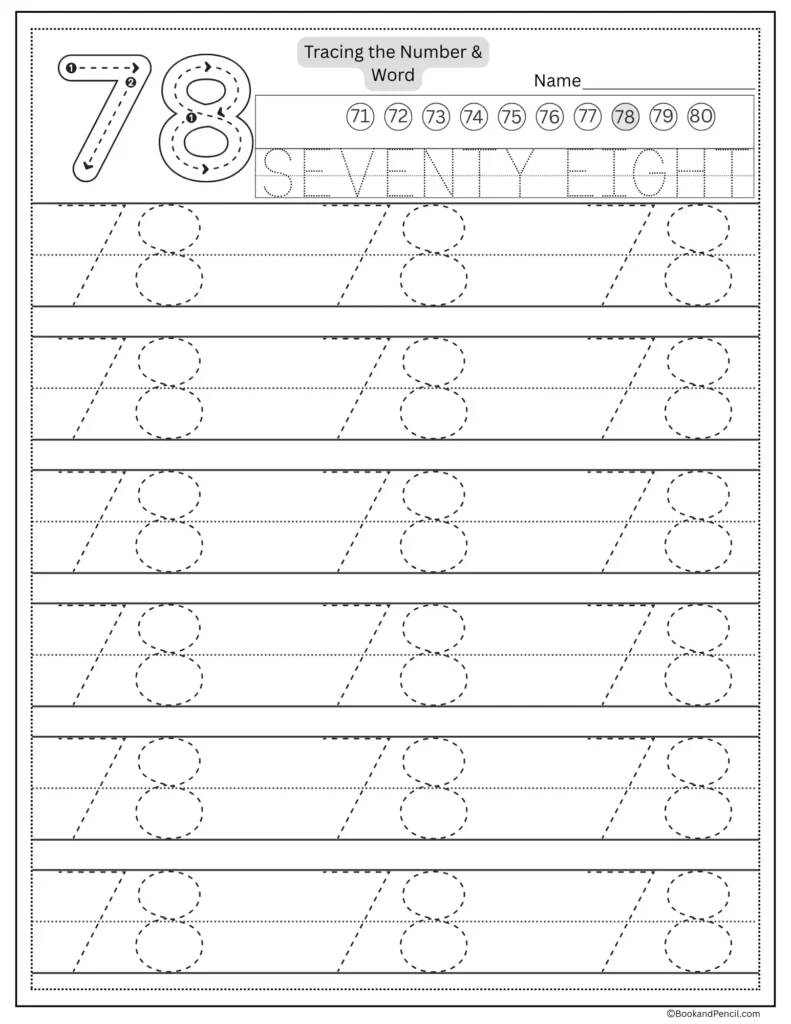
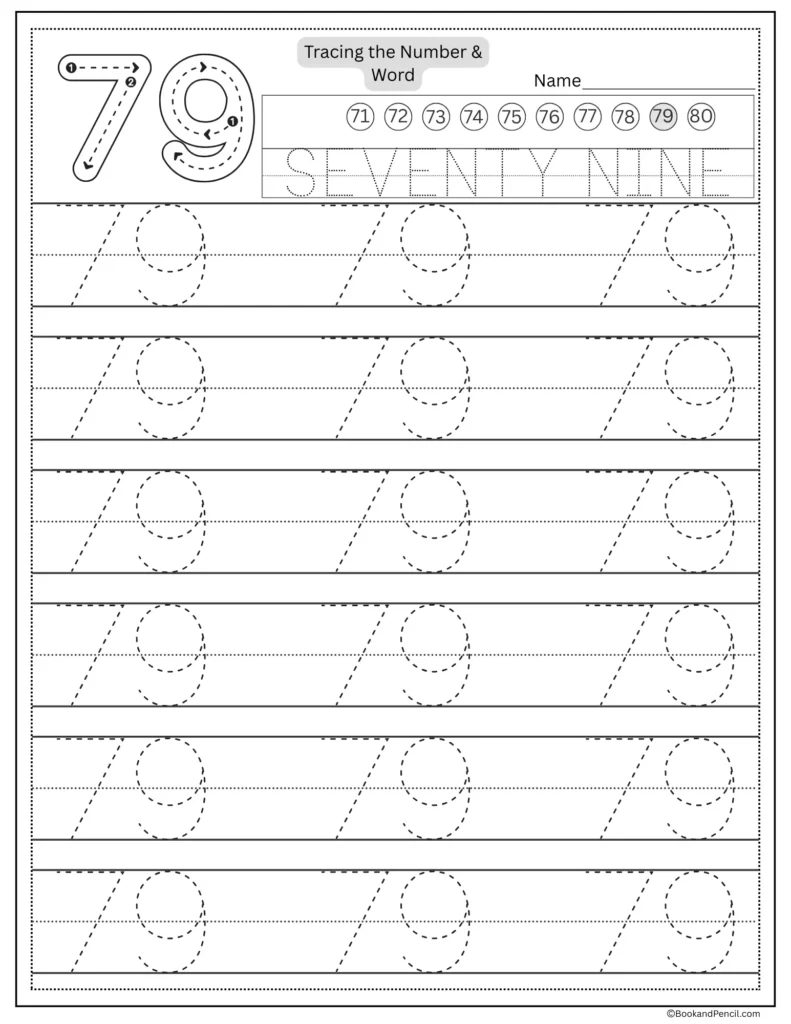
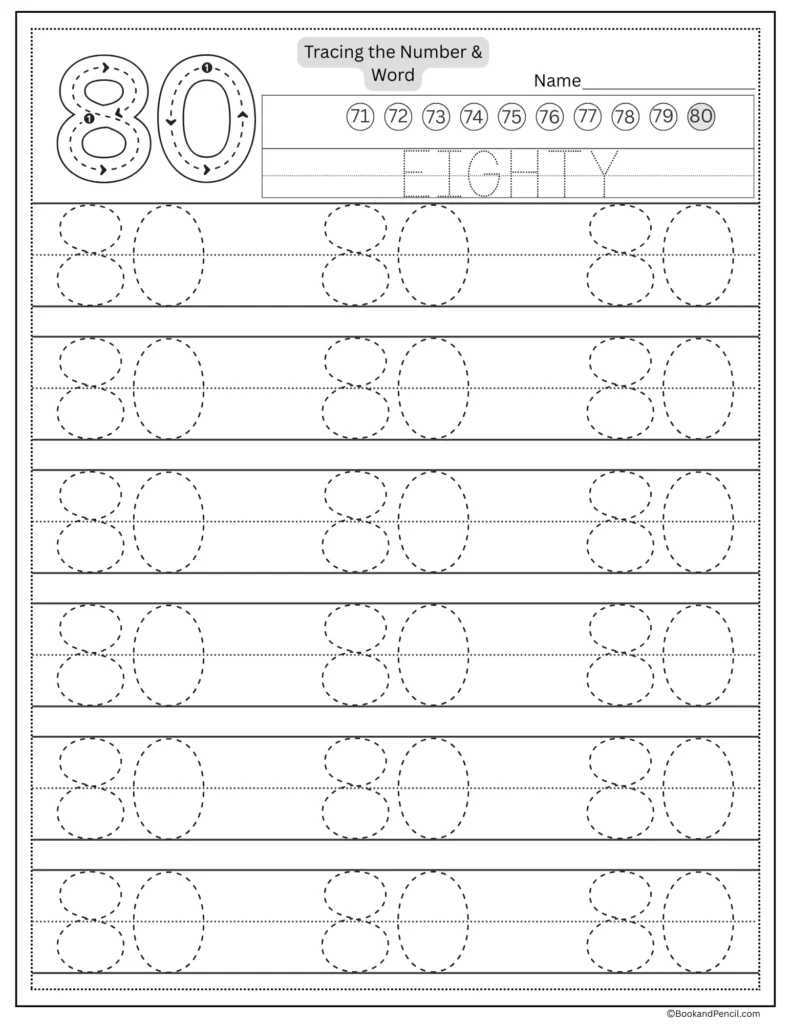
What's Inside Each Worksheet?
① Single-Stroke Figure-Eight Guide for “8” The display “8” carries one directional arrow — ① — but the path it traces is unlike anything in the series so far. Starting near the top, the stroke curves right, loops back left to close the upper oval, then continues downward and outward to form a wider lower loop, finally closing back at the starting point. The entire “8” is one continuous line that changes curve direction twice — inward at the top, outward at the bottom. This makes it the most directionally complex single-stroke digit in the 0–9 set.
② Ones Digit Guide (Varies Per Worksheet) Each page pairs the “8” with a different ones digit. By this point in the series, children encounter every ones digit as a familiar shape — what changes is the challenge of transitioning cleanly from the complex continuous “8” stroke into whichever ones digit follows it. That transition — stopping one movement and beginning another — is itself a refined handwriting skill.
③ Number Strip: 81 Through 90 The top panel displays 81 to 90, with 90 sitting at the far right. Children can see the nineties waiting — just one decade away from completing the entire 1–100 journey. That visibility transforms each worksheet in this set into a small act of progress toward a meaningful finish line.
④ Word Tracing: “EIGHTY + Ones Word” “EIGHTY” is one of the most distinctive decade words in the series — it contains a silent “GH,” making it one of the few number words where spelling and pronunciation genuinely diverge. Tracing it repeatedly through this set gives children early exposure to this spelling pattern in a low-pressure, repetition-based context.
⑤ Name Field and Six Practice Rows The Name____ field and six double-lined rows of three “8X” repetitions each deliver 18 complete writing attempts per worksheet — consistent with every set since the twenties, and effective right through to the end.
Why the "8" Is Worth Dedicated Attention
Most digits in the 0–9 set can be described as either straight-line-based (1, 4, 7) or curve-based (0, 2, 3, 6). The “8” belongs to neither group cleanly — it is a figure that requires a child to start a curve, close it, reverse direction, widen the curve, and close it again, all without lifting the pencil. For a six-year-old hand that has been trained on simpler movements, this is a genuine coordination challenge.
The worksheets address this through the arrow system — breaking the visual path of the stroke into a clear sequence — and through the sheer volume of repetition. By the 15th or 16th “8” on a single page, the movement begins to feel natural in a way that early attempts simply cannot achieve.
- The “8” introduces mid-stroke curve reversal — unique in the entire digit set
- Silent-letter spelling in “EIGHTY” provides early literacy exposure
- 18 repetitions per page specifically target the muscle-memory demands of this complex digit
- The number strip’s endpoint (90) makes the final set feel tangibly close
- This is the last set before children encounter numbers ending in the milestone of 100