| Kindergarten Worksheets |
|---|
| Learning Letters |
| Tracing Letters |
| Tracing Numbers |
Number Tracing Worksheets 51– 60 (Free Printable PDF)
There is a turning point in every child’s number-writing journey, and the fifties mark exactly that. These number tracing worksheets 51–60 introduce a digit that looks simple from a distance but reveals surprising structure up close — the “5”, a number made of three distinct directional moves that flow together in a way no earlier digit quite does.
Paired throughout this set with ones digits children already know well, the “5” becomes the new challenge — and the number 54 worksheet shows precisely why this decade earns its own dedicated attention.
Number Tracing Worksheets 51–60 Choose a Worksheet
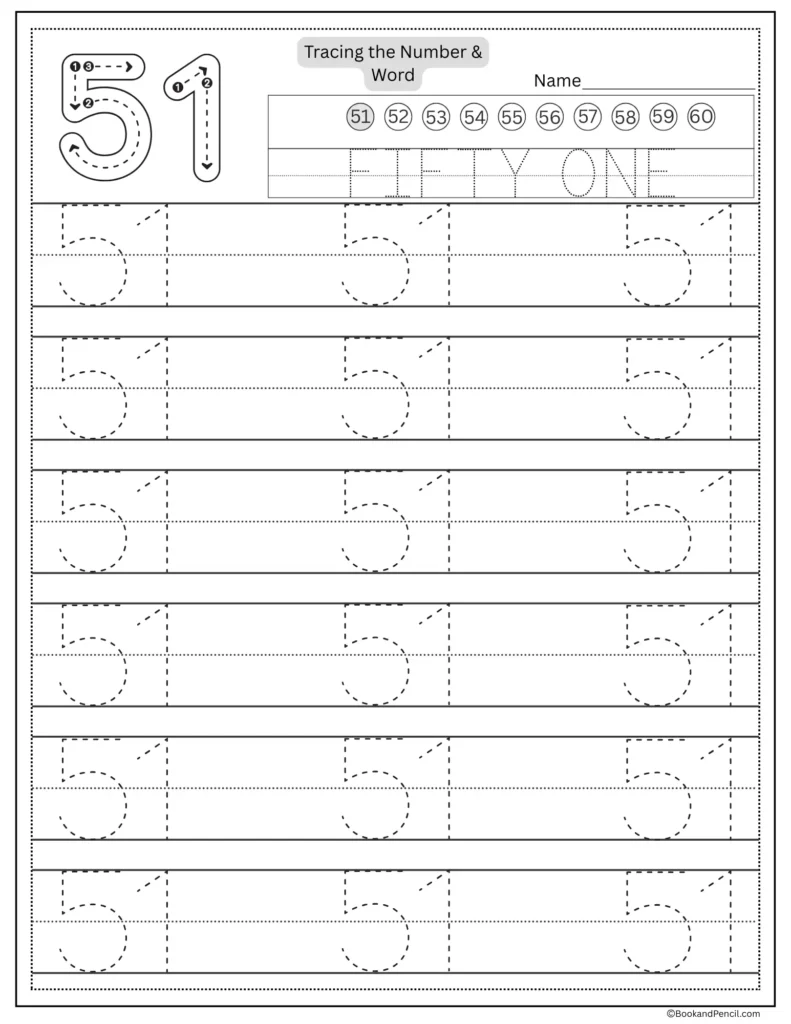
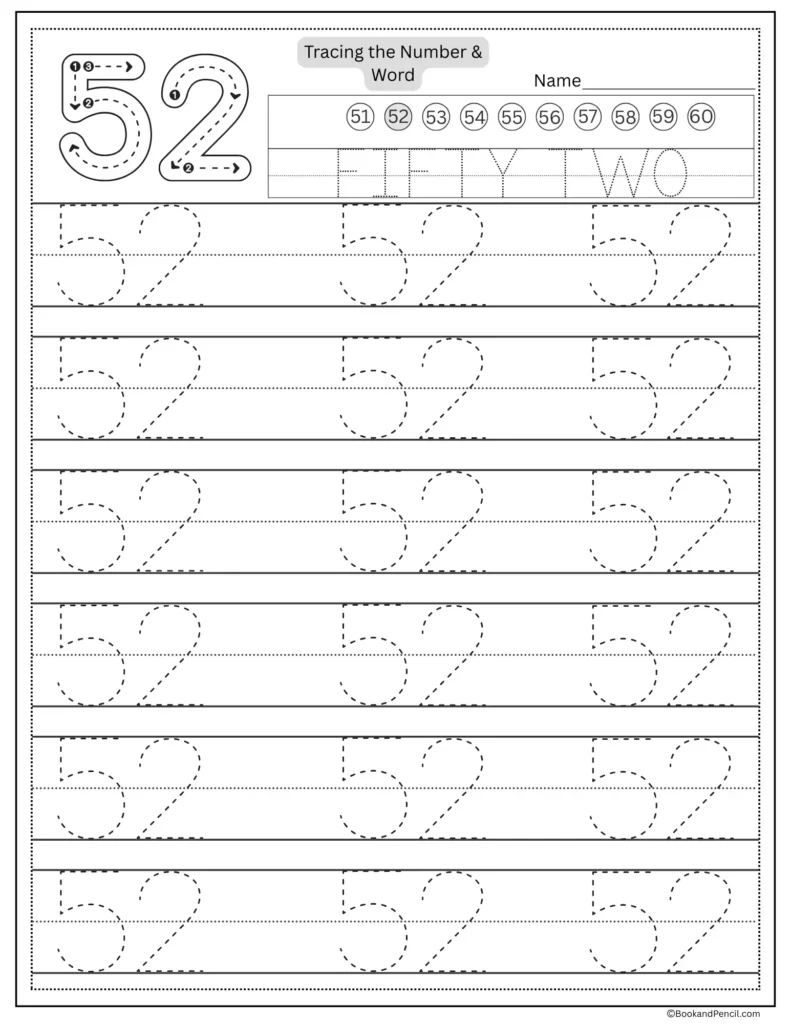
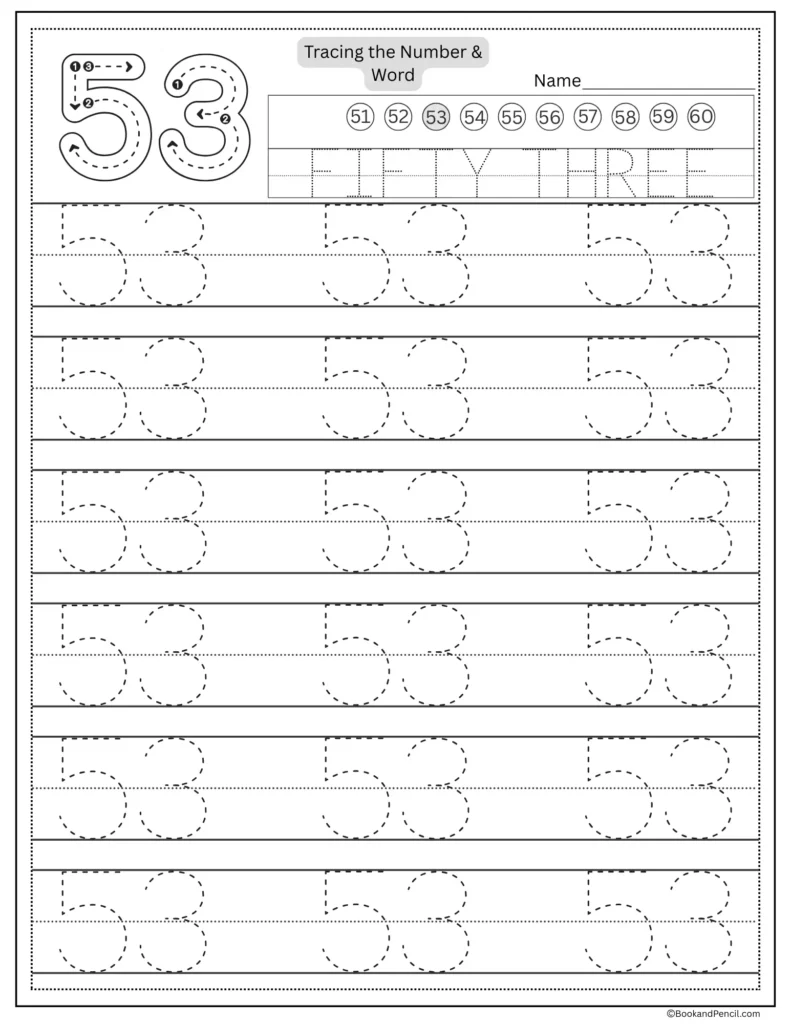
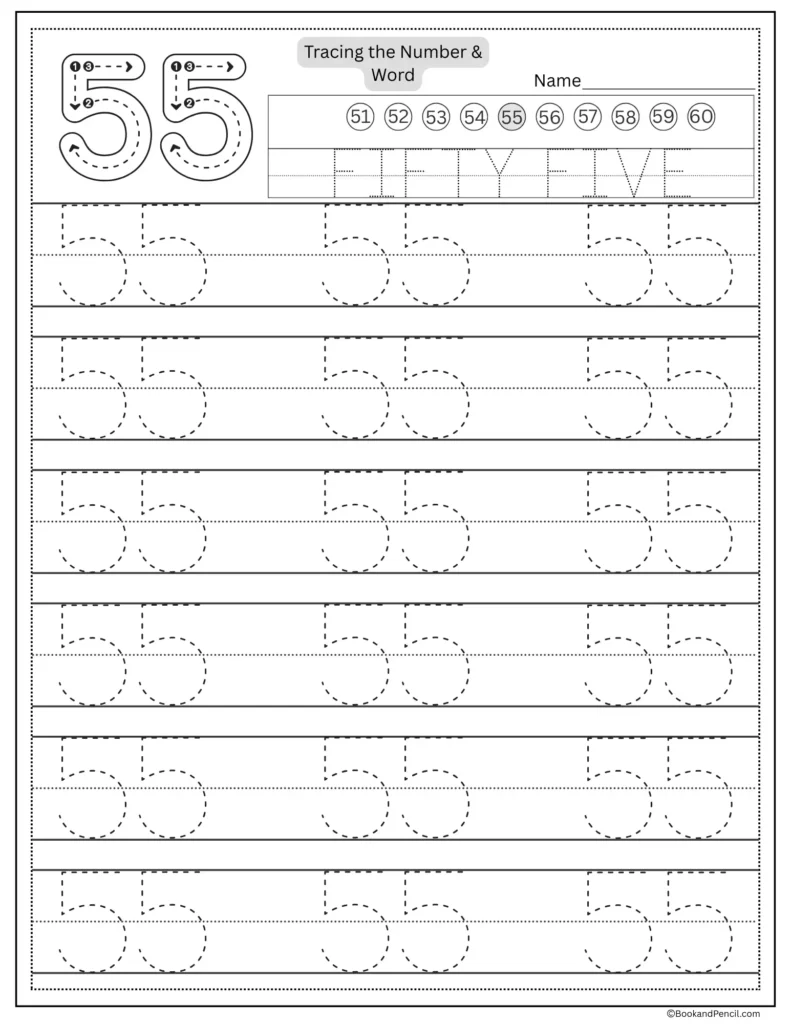
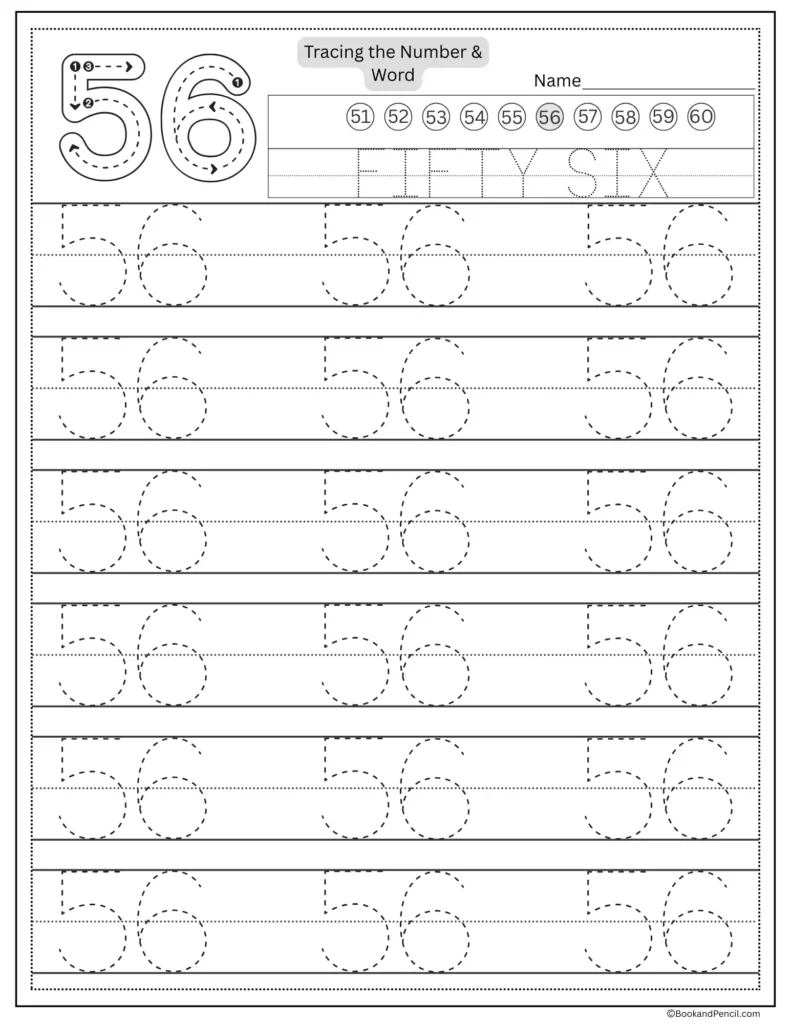
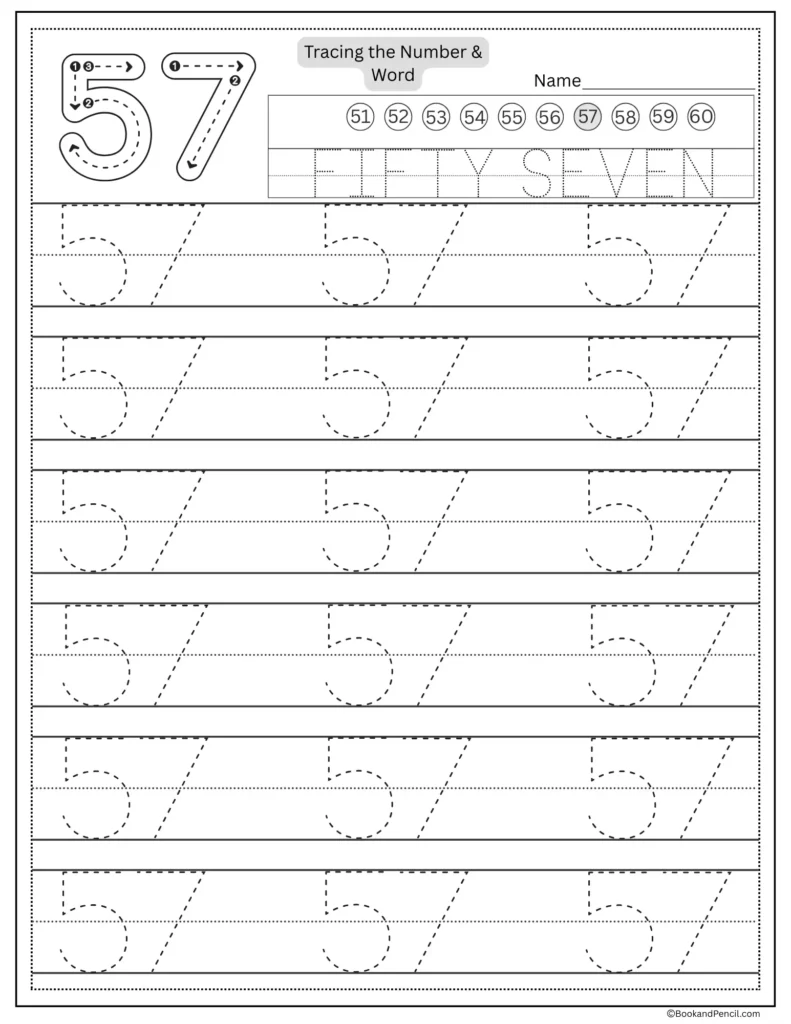
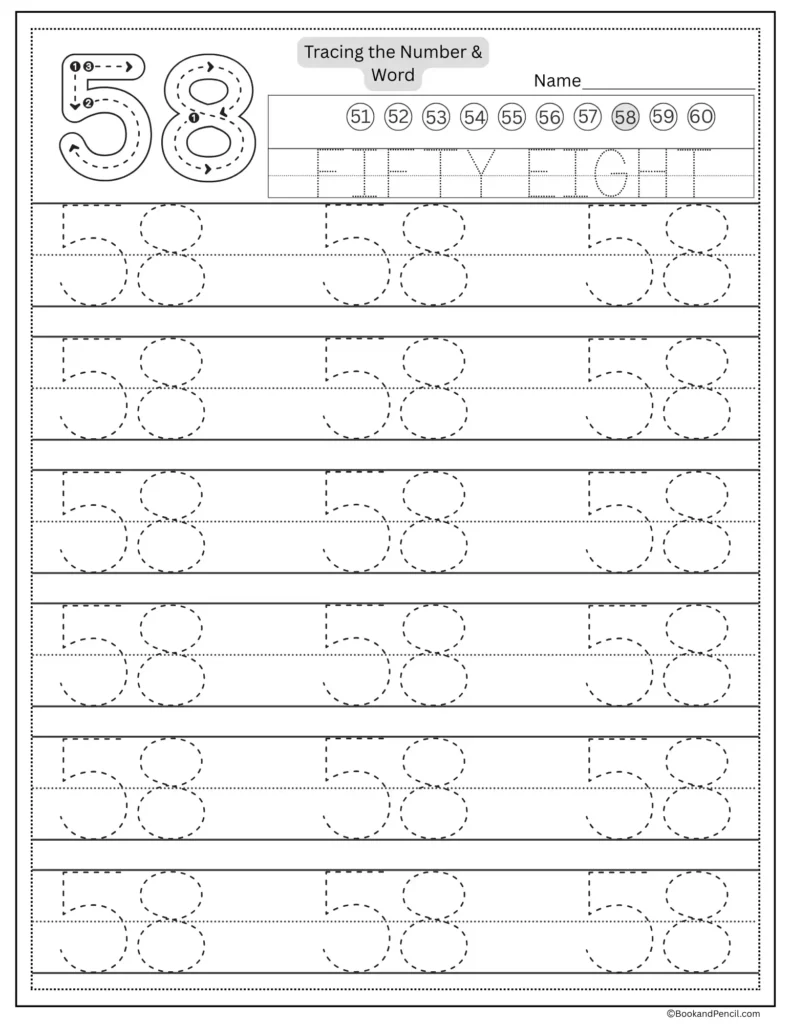
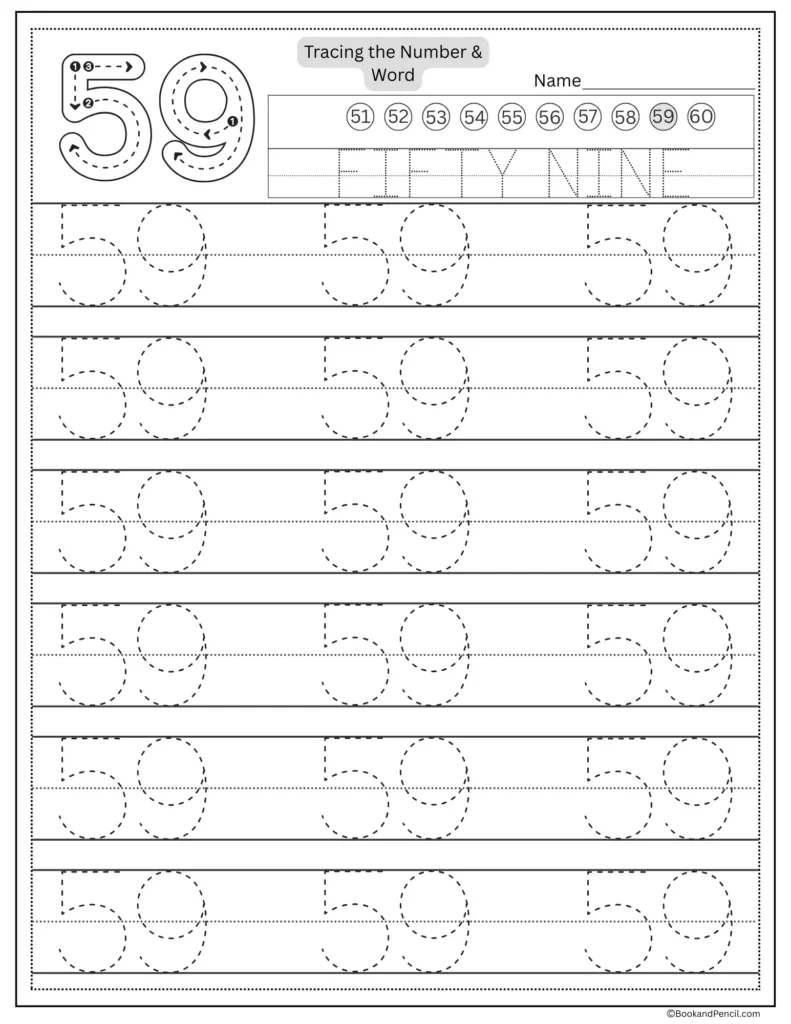
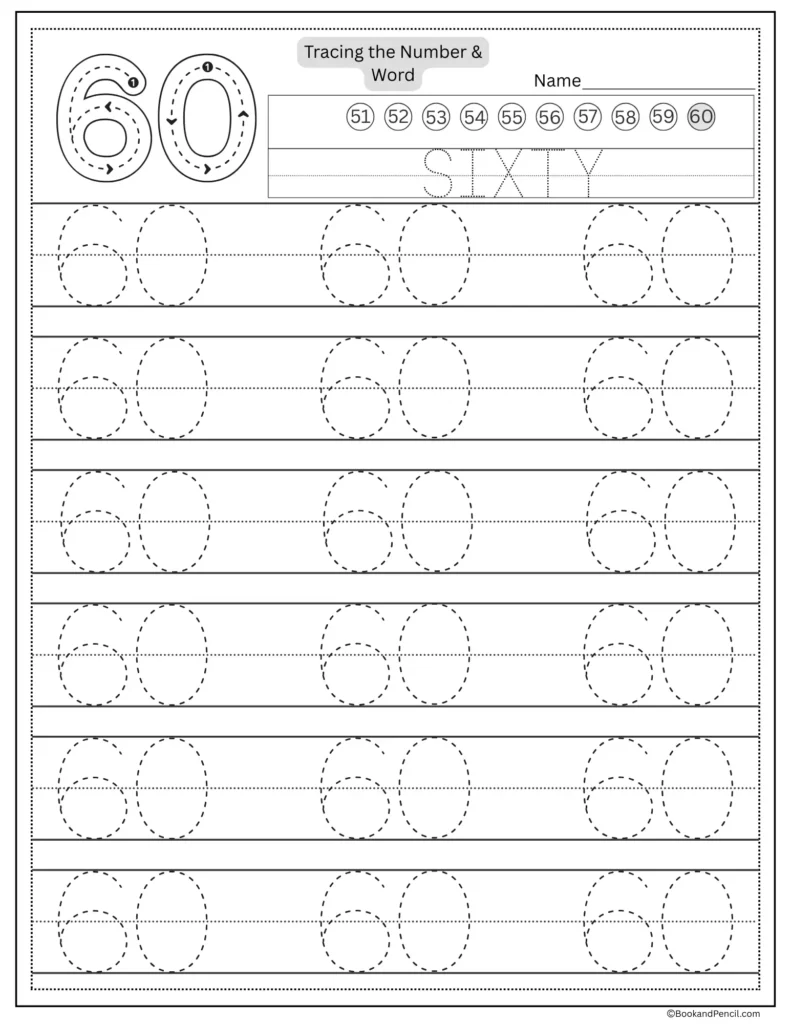
What's Inside Each Worksheet?
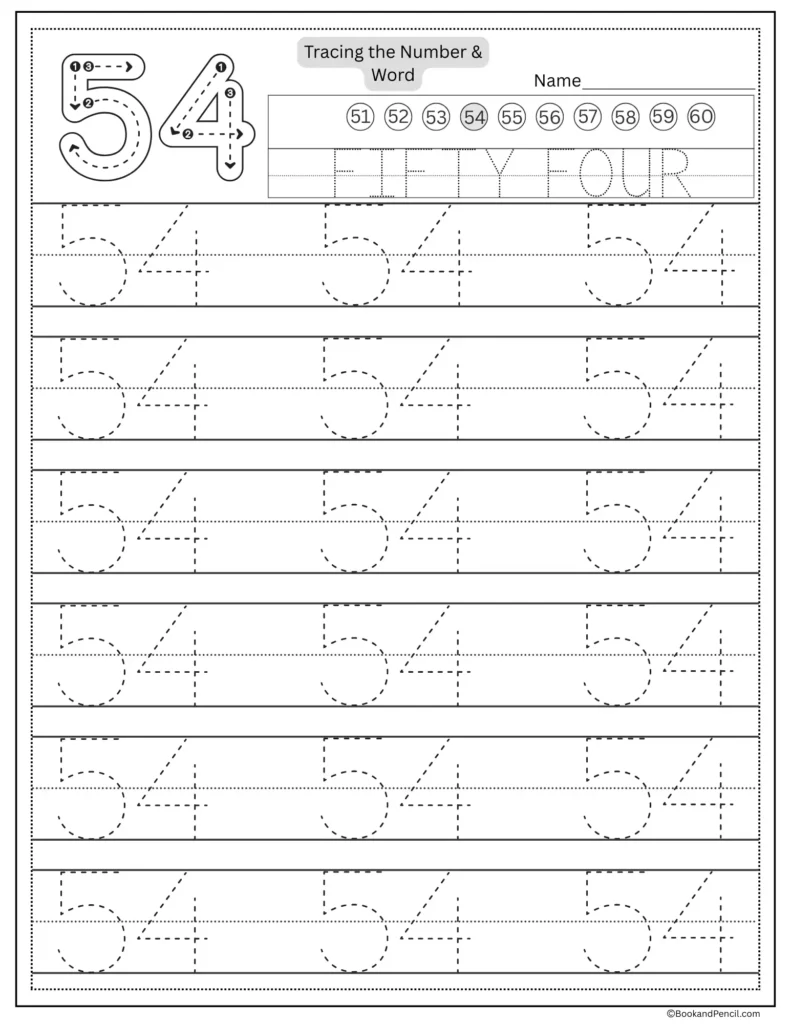
Here’s a precise breakdown using the number 54 worksheet:
① Three-Stroke Guide for “5” — A New Kind of Complexity The display “5” at the top-left uses three numbered arrows — ①, ②, and ③ — but unlike the angular “4” from the previous set, these strokes involve a mix of directions and curves. Arrow ① moves horizontally across the top, Arrow ② drops and curves into the rounded belly of the digit, and Arrow ③ completes the upper flag stroke. This combination of straight and curved movements in one digit makes the “5” genuinely distinct — and genuinely worth dedicated practice.
② Three-Stroke Guide for “4” — A Familiar Companion The “4” in the display number also carries three arrows — ①, ②, and ③ — the same three-stroke breakdown children worked through throughout the 41–50 set. Seeing the “4” again here, now in the ones position, gives children a confidence anchor. They already know this digit. Their job now is to write it fluently while managing the newer “5” as their lead stroke.
③ Number Strip: 51 Through 60 The top panel displays 51 to 60 in a clean horizontal row. With 54 sitting in the middle of the strip, children can see both where they’ve been (51, 52, 53) and where they’re heading (55 through 60) — reinforcing a continuous sense of forward progress through the decade.
④ Word Tracing: “FIFTY FOUR” The dotted word FIFTY FOUR runs across the full tracing line below the number strip. “Fifty” introduces a word that sounds and looks different from “Forty” — the “F” opening, the double-letter interior, and the “ty” ending all give children new visual and phonetic territory to navigate while writing. Tracing it repeatedly builds both spelling awareness and letter formation at the same time.
⑤ Name Field The Name____ line at the top right personalizes each worksheet for individual learners and makes classroom distribution easy.
⑥ Six Rows of High-Repetition Practice Six double-lined rows fill the page, each containing three side-by-side “54” tracings — delivering 18 complete repetitions per worksheet. The dotted midline running through each row serves as a height guide, ensuring children don’t let the “5” grow too tall or allow the “4” to shrink inconsistently beside it.
What Makes the 51–60 Range Uniquely Valuable
The fifties are where children encounter their first multi-directional tens digit — a “5” that moves across, then down, then curves back before capping with a top stroke. Every previous tens digit had a cleaner movement signature. The “3” curved twice in the same direction. The “4” used only straight lines. The “5” asks for all three — a straight line, a drop, and a curve — inside a single numeral.
This challenge might sound small, but for a five-or six-year-old hand, it represents a genuine step up in pencil coordination. The worksheets address this directly through high repetition and clear arrow-sequencing, so children aren’t left guessing how the strokes connect.
Additionally, this set pairs the “5” with every ones digit from 1 through 9 (plus 60 to close), meaning children revise virtually the entire single-digit set in the ones position — making 51–60 one of the most comprehensive revision sets in the full 1–100 series.
- First exposure to a mixed straight-and-curved multi-stroke tens digit
- The familiar “4” reappears in the ones place, offering confidence within the new challenge
- “Fifty” as a word introduces fresh phonics distinct from all previous decade names
- Structured repetition (18 attempts per worksheet) builds stroke automaticity for the “5”
- Number 60 previews the next decade, keeping forward momentum alive