| Kindergarten Worksheets |
|---|
| Learning Letters |
| Tracing Letters |
| Tracing Numbers |
Number Tracing Worksheets 21–30 (Free Printable PDF)
By this stage, children have already explored single-digit numbers and the tricky transition into the teens. Now it’s time to take a confident step forward. These number tracing worksheets 21 to 30 introduce kids to a brand new tens group called the twenties, where a clear and exciting pattern begins to emerge.
Unlike the irregular number words in the 11–20 range (like “Eleven” or “Twelve”), numbers from 21 to 30 follow a predictable naming pattern: Twenty-One, Twenty-Two, Twenty-Three… This consistency makes learning feel rewarding and builds real momentum for young learners.
Number Tracing Worksheets 21–30 Choose a Worksheet
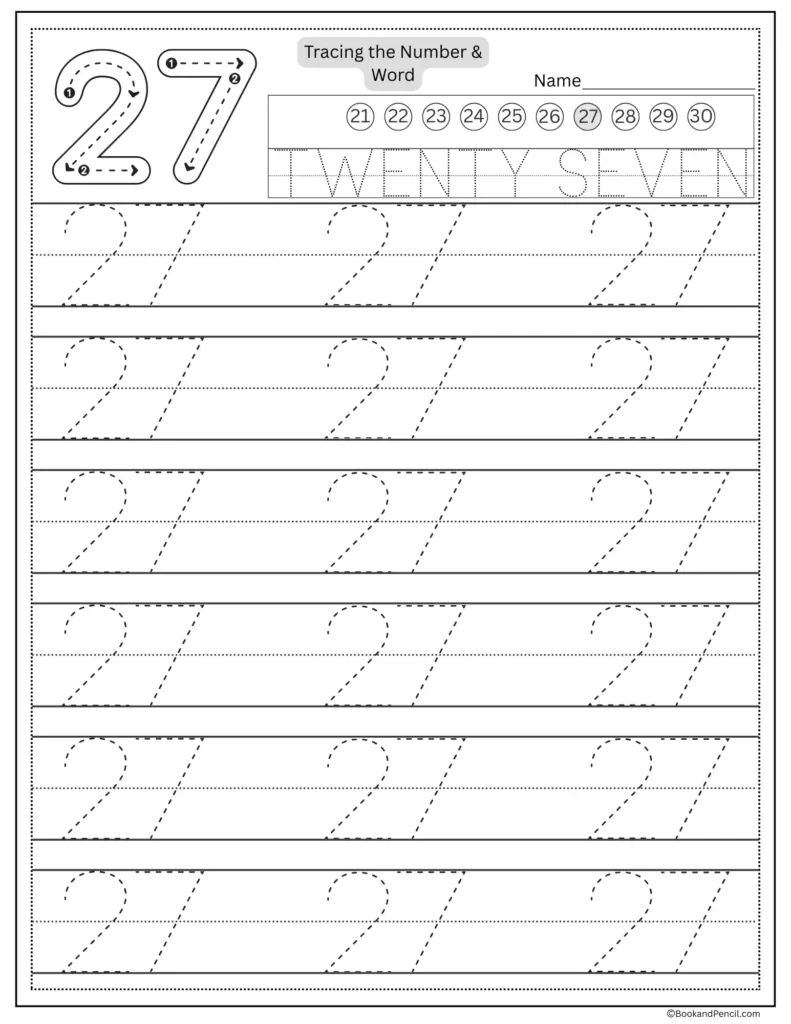
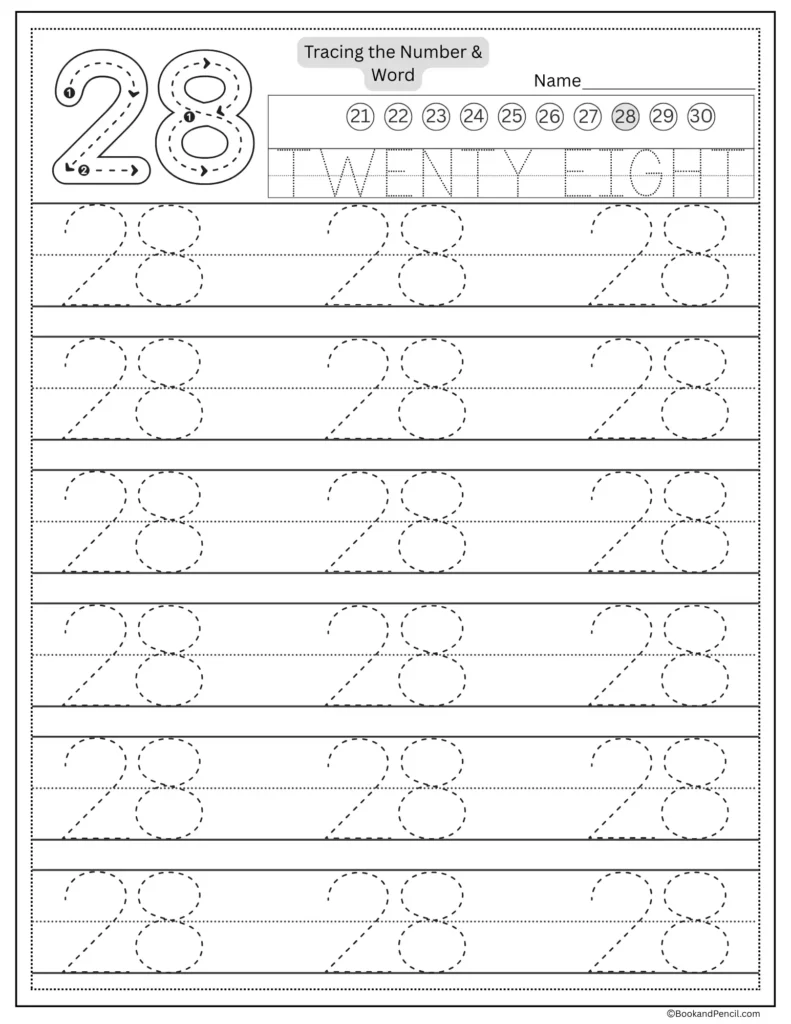
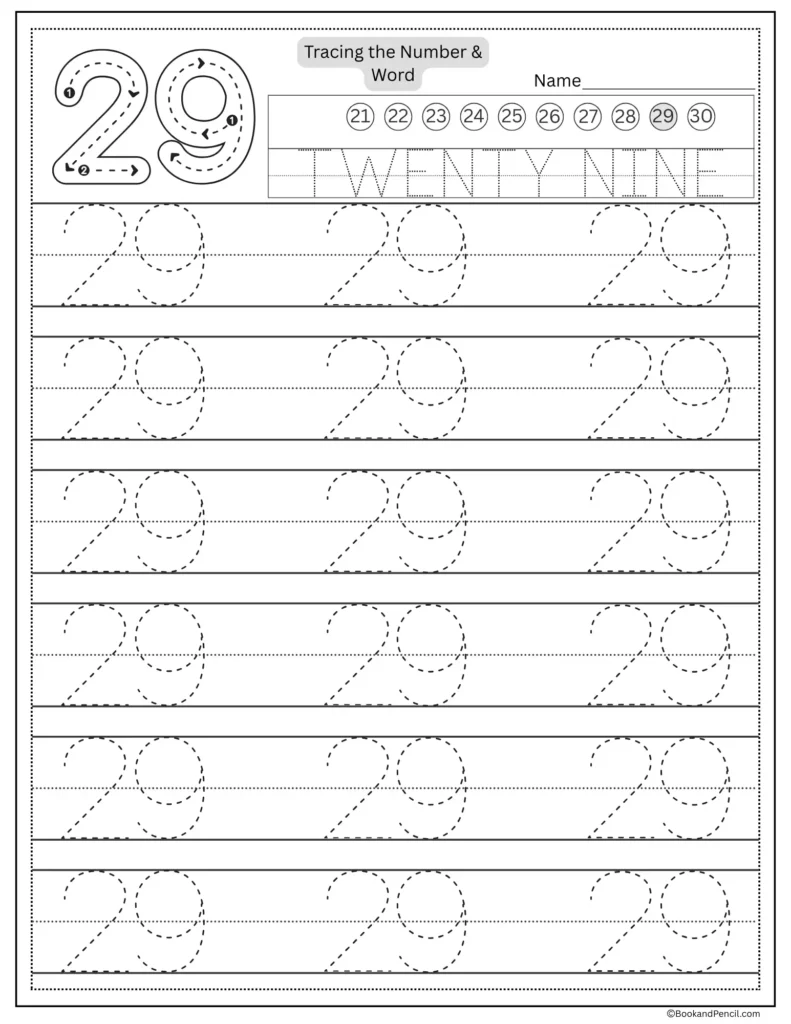
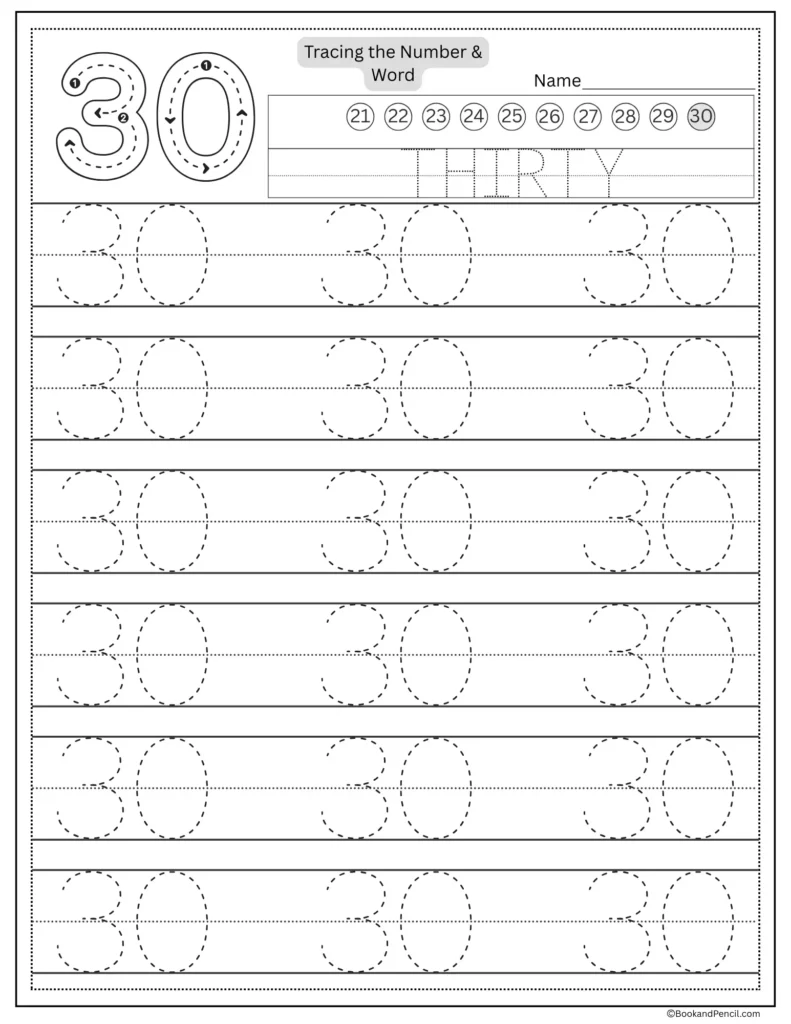
Why the 21–30 Range Is a Key Learning Milestone
The twenties are where children begin to truly understand how our number system repeats and builds. Each number in this range shares the same leading digit — 2 — which helps kids recognize place value patterns in a very natural, visual way.
This range also challenges pencil control in a new way. Writing numbers like 25 or 28 requires smooth transitions between two distinct digit shapes, strengthening the fine motor coordination built in earlier worksheets.
- Reinforces the concept that the tens digit stays the same (always “2”) while the ones digit changes
- Helps children predict and read the next number in a sequence
- Introduces number words with compound structure (Twenty-One, Twenty-Two…) building early literacy alongside math
Builds writing stamina as children are now comfortable with two-digit tracing
What’s Inside This Worksheet?
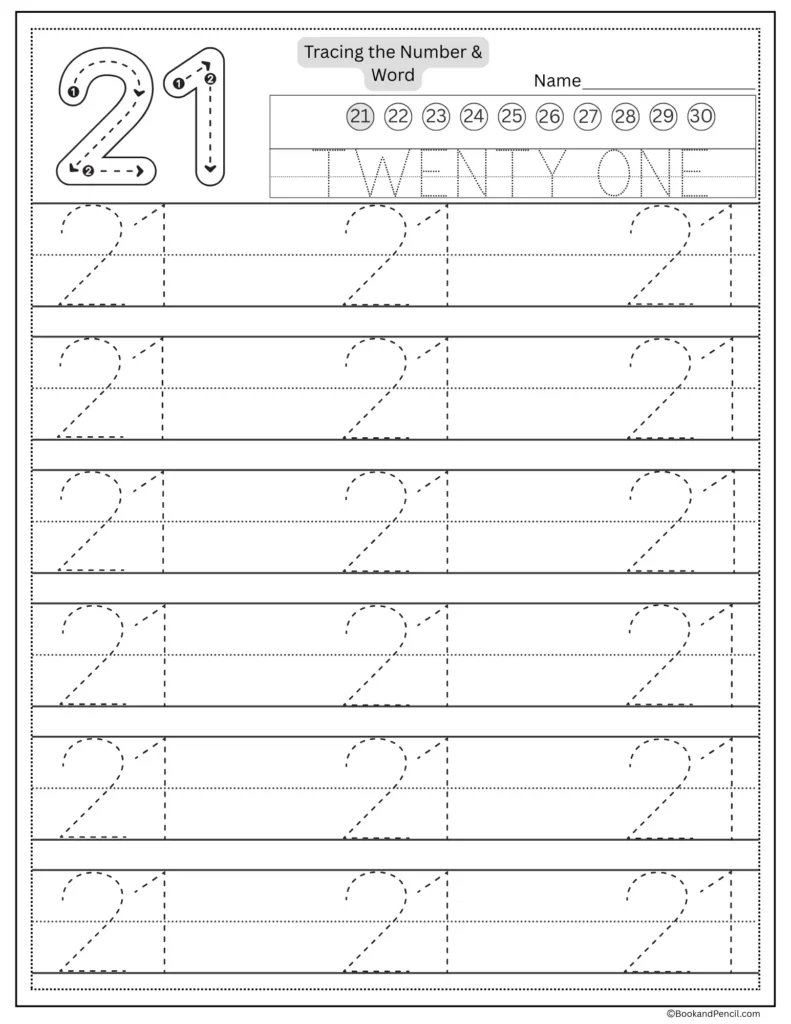
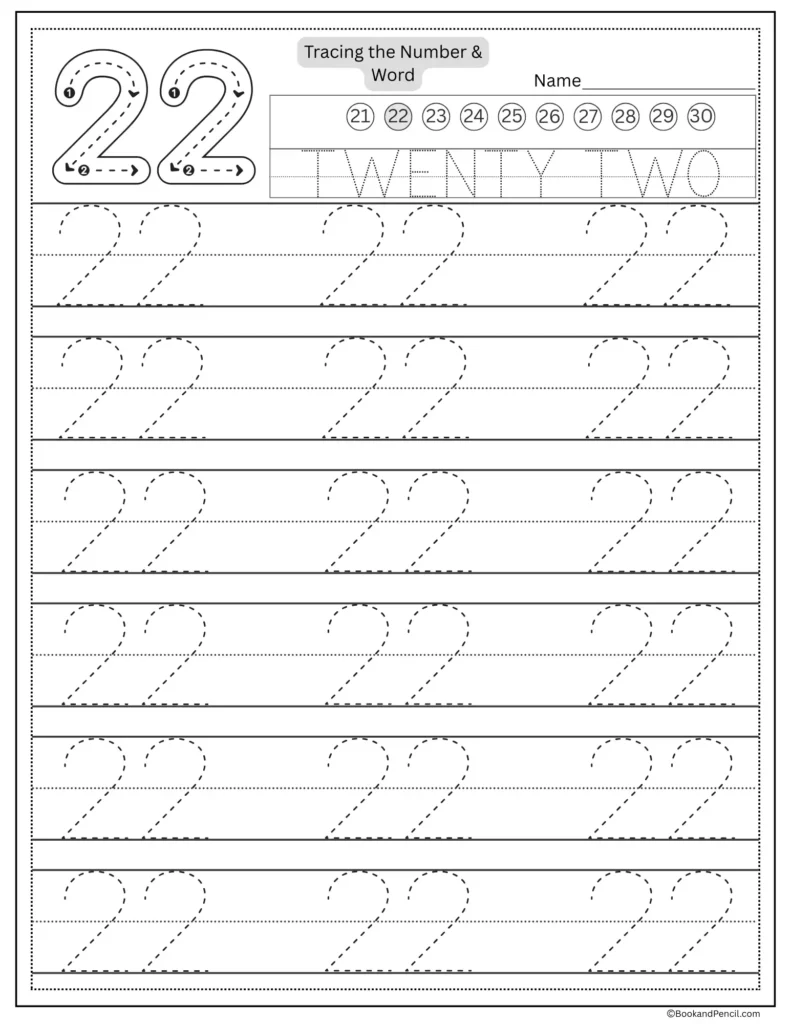
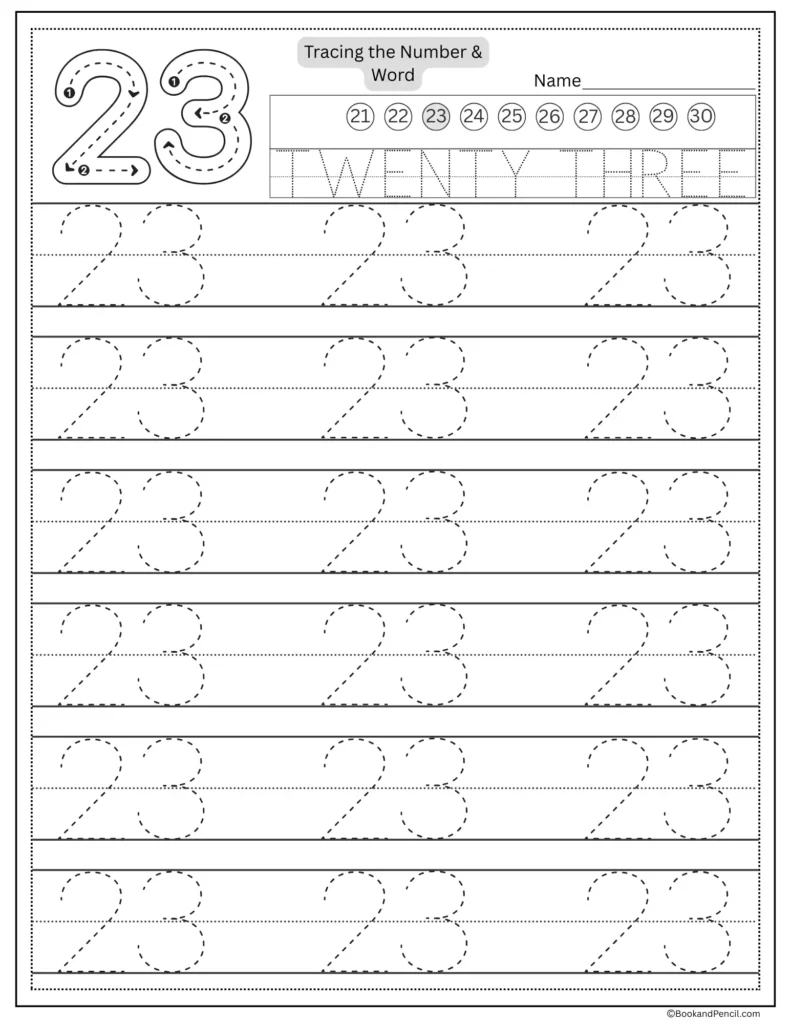
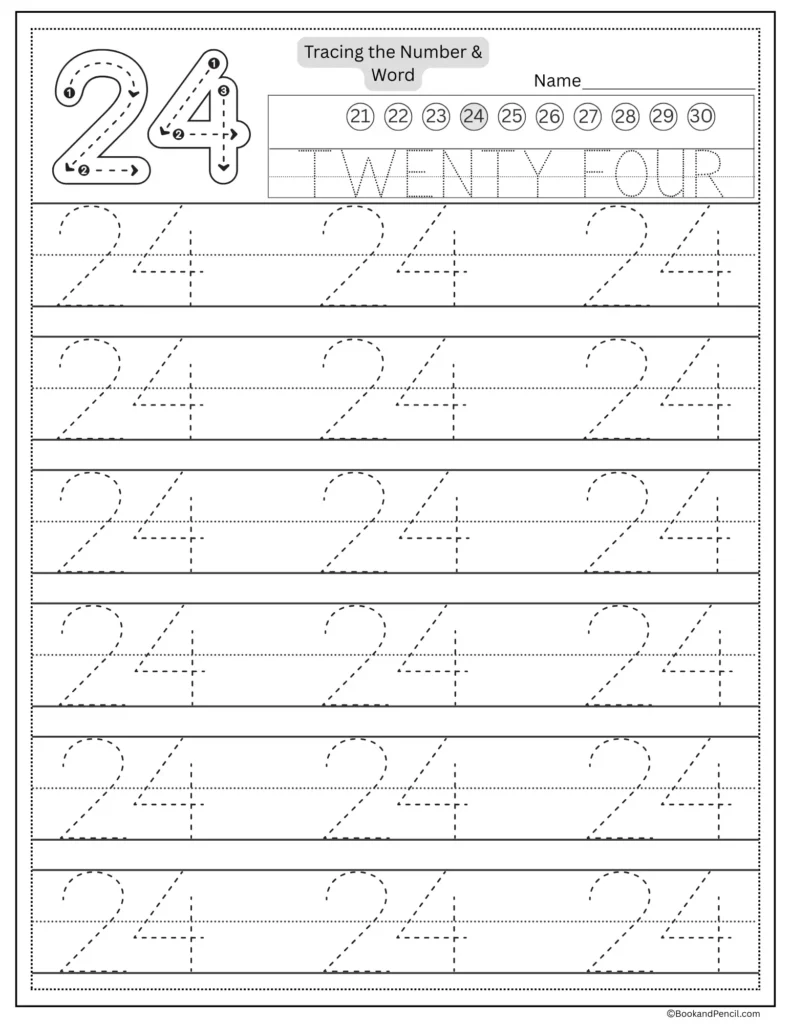
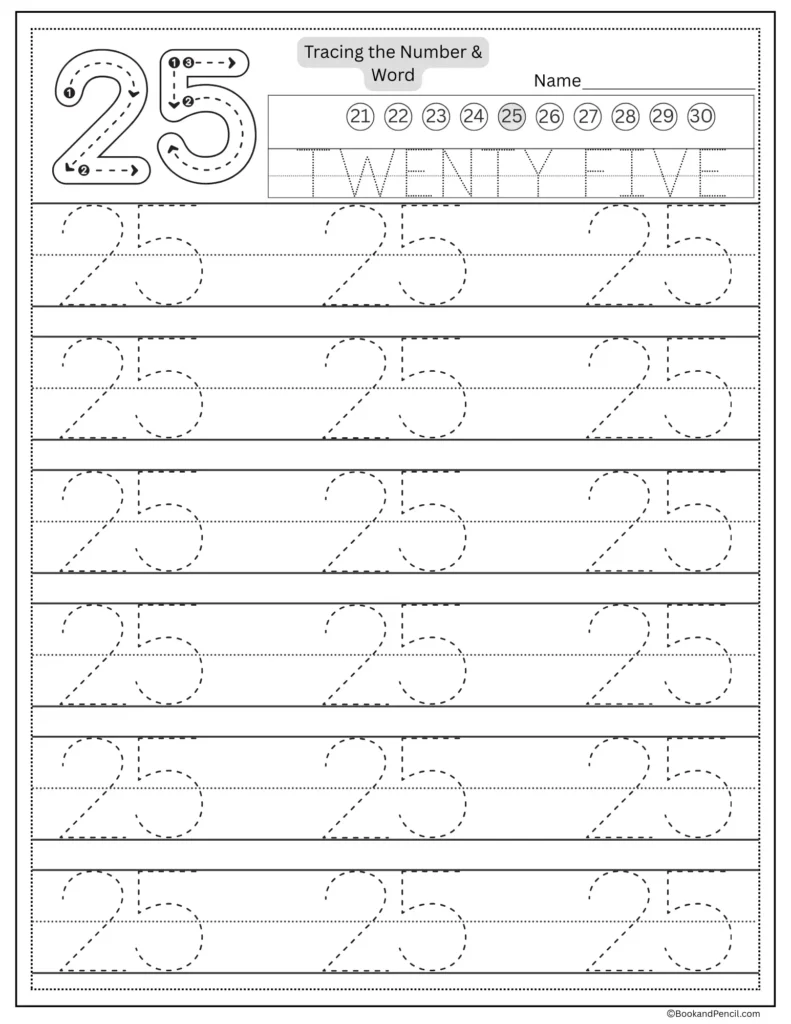
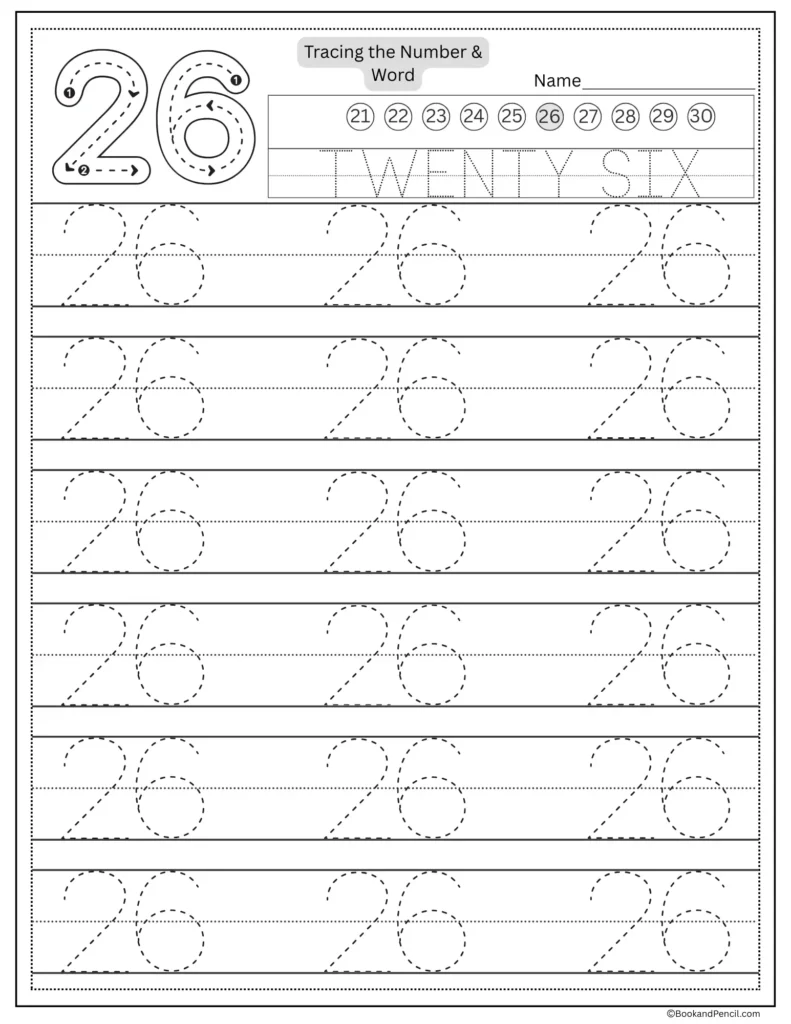
- Tracing practice for numbers 21 to 30 — each number on its own dedicated worksheet
- A large, clearly printed number with directional arrows showing correct stroke order
- Dotted tracing lines across multiple rows for guided, repetitive practice
- The number word written out (e.g., “Twenty-Five”) to connect numerals with language
- A clean, distraction-free layout so children can stay focused on writing