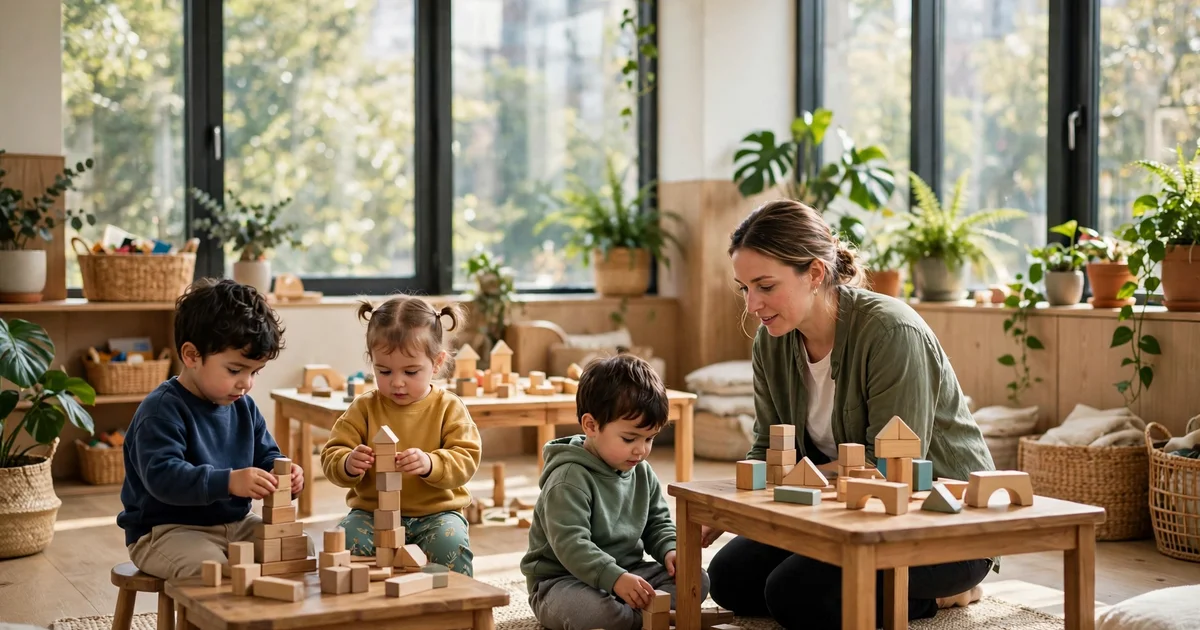
Johns Hopkins University has officially opened a new early learning center that can serve 162 children — almost two-thirds more than its previous building. University leaders gathered on Friday 23 October 2026 for a ribbon-cutting ceremony at the new Homewood Early Learning Center, celebrating a bigger, greener home for the children of faculty and staff.
What Johns Hopkins announced
The new facility replaces an earlier centre that opened in 2015 and served 90 children. The new building can serve 162 children, an increase of two-thirds, and the space has grown from 11,300 to 27,512 square feet. It holds 16 classrooms plus administrative offices and work and conferencing spaces, with dedicated drop-off and parking areas and an 18,600-square-foot outdoor play area.
The building was designed with sustainability in mind. The university aims to earn LEED Gold Green Building Certification for the centre, which is all electric, uses heat-pump technology, collects rainwater for watering plants, and was built to maximise natural daylight, with many trees around it. President Ron Daniels and Meredith Stewart, vice president and chief human resources officer, spoke at the ceremony alongside the university’s facilities and design leaders and representatives of the centre’s operator, Downtown Baltimore Child Care.
Why it matters
Childcare capacity is one of the quiet constraints on family life. When a workplace centre can only take 90 children, dozens of families sit on waiting lists, juggle patchwork care, or turn down work. Adding 72 places does not solve a city’s childcare shortage, but for the families who get those places it changes daily life completely: a reliable drop-off, a shorter commute, and a child in a stable classroom.
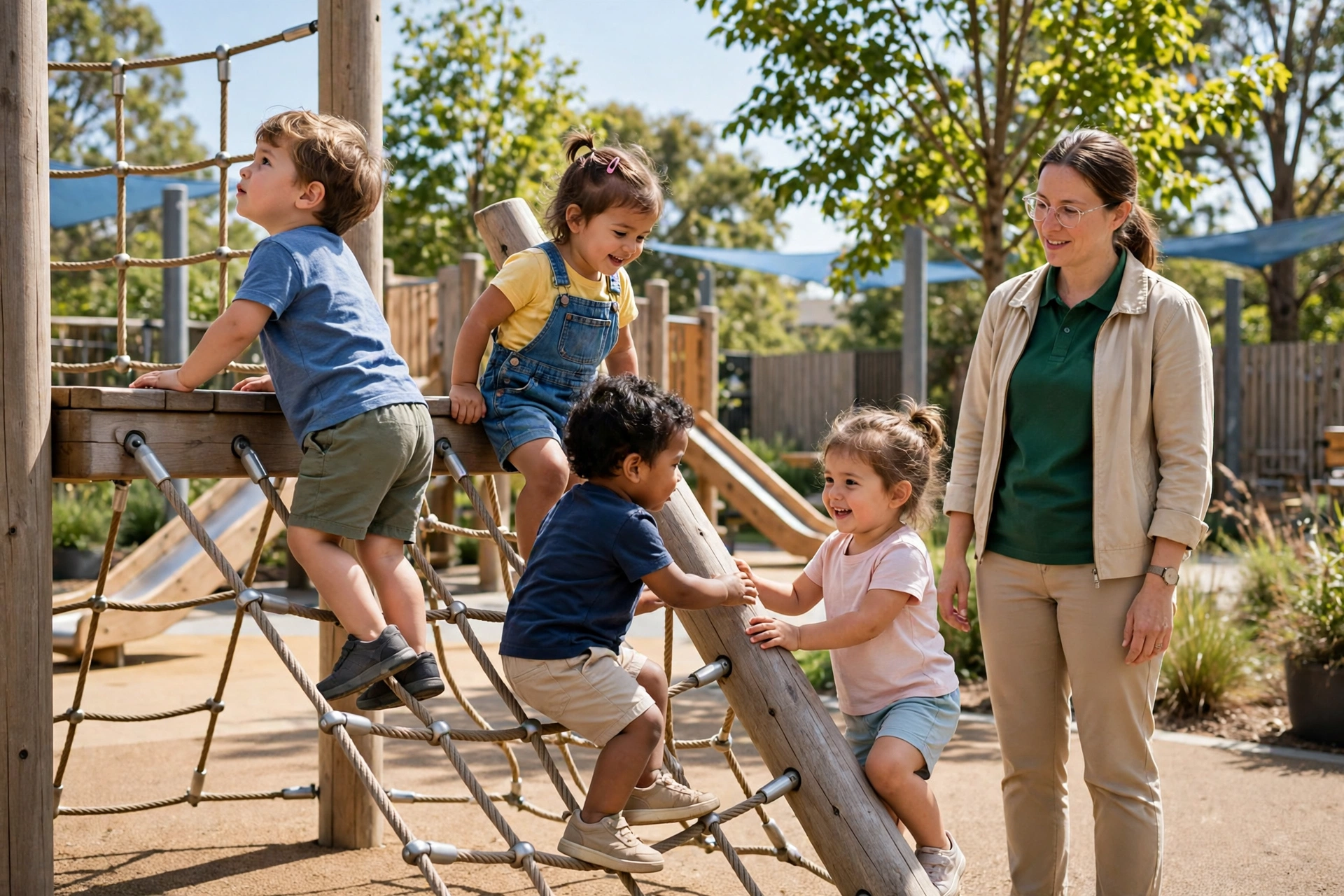
The design choices matter too. Natural daylight, outdoor play space and a building that collects its own rainwater are not luxuries for small children; daylight and outdoor time support mood, sleep and physical development, and a calm, well-planned environment helps teachers do their best work.
What this means for parents and teachers
If you are choosing childcare, Johns Hopkins’ new centre is a useful checklist for what to look for. Ask about capacity and waiting lists, but also about the things that shape a child’s day: how much outdoor play is built in, how much natural light the rooms get, how drop-off works, and how stable the teaching team is. A centre run by an experienced operator, as this one is, is a good sign.
For teachers, the expansion is a reminder that early childhood workplaces are worth investing in. Sixteen classrooms, dedicated workspaces and a proper outdoor area are the conditions that keep good educators in the profession — and keeping educators is what keeps classrooms stable for children.
At home, the same principles apply on a smaller scale. Short, regular practice with letters, numbers and words builds the skills children need before kindergarten. Our free name tracing generator makes a personalised workbook from your child’s own name, and our sight words generator turns common words into printable games and worksheets.
A small piece of a bigger childcare puzzle
University childcare centres serve a particular group — here, the children of faculty and staff — but they also act as proof of what is possible. When a major employer invests in a 27,512-square-foot early learning centre, it signals that childcare is infrastructure, not a perk. Other employers, cities and universities face the same arithmetic: every place added is a family that can work, study and plan with more certainty.
The contrast with places where childcare is shrinking is sharp. In the same week, Colorado providers reported a 900-ticket backlog just to register preschool sites. Building new capacity, as Johns Hopkins has done, and keeping the system that supports providers working, are two halves of the same job.
What happens next
The centre’s next test is everyday life: filling 162 places, keeping its classrooms staffed, and earning that LEED Gold certification. Families connected to Johns Hopkins can learn more through the university’s HR childcare pages. For everyone else, the opening is a prompt to ask your own employer, council or school district a simple question: how many early learning places do we have, and how many do we need?
Frequently Asked Questions
How many children can the new centre serve?
162 children, up from 90 in the previous facility — an increase of about two-thirds.
When did it open?
University leaders held the ribbon-cutting ceremony on Friday 23 October 2026, and Johns Hopkins reported the opening on 26 October 2026.
Who can attend the centre?
It provides an early learning centre for the children of Johns Hopkins faculty and staff on the Homewood campus.
What is special about the new building?
It has 16 classrooms, an 18,600-square-foot outdoor play area, and sustainable features including all-electric systems, heat pumps and rainwater collection, with the university aiming for LEED Gold certification.
Who operates the centre?
Downtown Baltimore Child Care operates the centre.
What should parents look for in any childcare centre?
Capacity and waiting lists matter, but so do outdoor play, natural light, a stable teaching team and an experienced operator — all features of the new Homewood centre.
Source: Johns Hopkins University Hub, 26 October 2026: https://hub.jhu.edu/at-work/2026/10/26/homewood-early-learning-center/