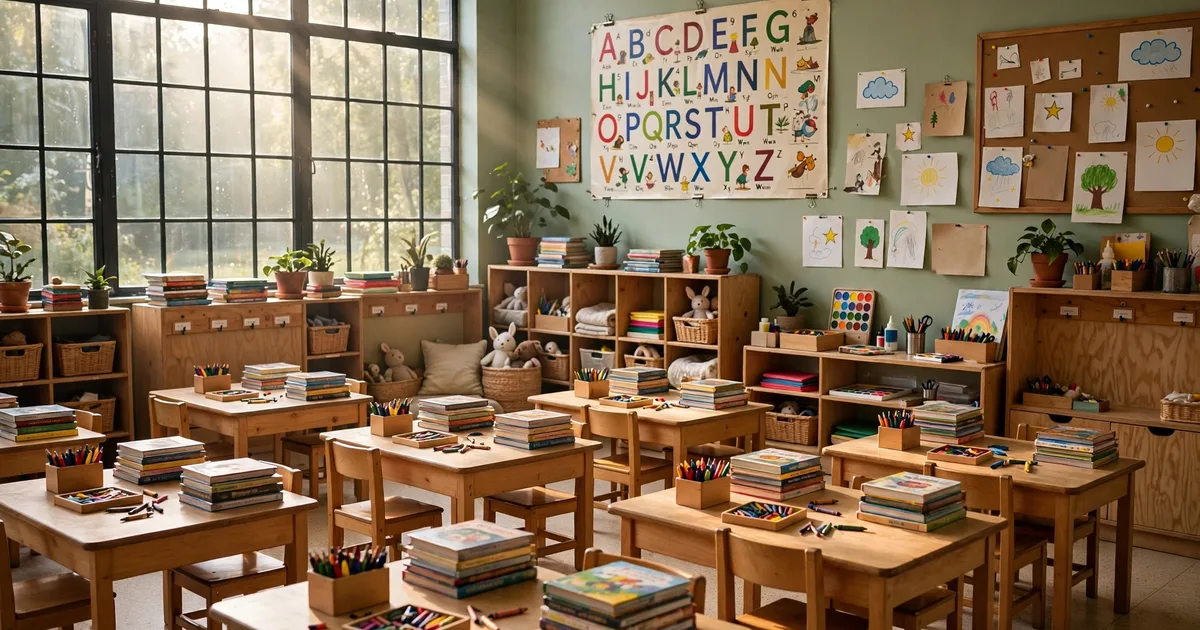
Ohio lawmakers are taking a hard look at whether the state’s early-childhood programs actually prepare children for kindergarten — and a newly introduced bill would create a task force to find out.
House Bill 1023, introduced October 7, 2026 by Republican Representative Josh Williams, would establish a study group charged with examining how well Ohio’s patchwork of early-childhood programs prepares children for kindergarten and how effectively those programs coordinate with the state’s schools.
What the Bill Proposes
The proposed task force would be required to deliver a final report by December 1, 2027, covering program funding, participation, educational outcomes, and gaps in administration. Importantly, the recommendations would distinguish between changes state agencies could make on their own and changes that would require new legislation.
The task force would include six legislators — with minority-party representation — alongside representatives from state agencies including Children and Youth and Education and Workforce, plus child-care providers, education specialists, and at least one parent or guardian. Members would serve without compensation and meet at least monthly after an initial organizing meeting.
Crucially, this is a study proposal, not a new child-care subsidy. The bill would not fund new classroom slots or expand eligibility for existing programs. Instead, it asks a pointed question: are the programs Ohio already funds producing measurable kindergarten readiness?
Why Kindergarten Readiness Matters
Kindergarten readiness — a child’s physical, academic, and social-emotional preparation to start school — is one of the strongest predictors of later school success. Children who enter kindergarten with solid early literacy and numeracy skills are more likely to read proficiently by third grade, a milestone that research consistently links to high school graduation and beyond.
Ohio already runs an early-childhood education grant program within the Department of Children and Youth, which provides grants to qualifying early-learning programs subject to available funds. But as the bill’s framing makes clear, funding a program and knowing whether it works are two different things.
The timing is also notable. Across the country, early-literacy scores have plateaued. National data shows the share of K-2 students on track to learn to read has stalled after years of post-pandemic recovery. Policymakers in several states are now asking harder questions about what their early-childhood investments actually deliver.
How the Review Would Work
The bill deliberately limits the scope of the inquiry. It is not meant to duplicate existing councils or to comprehensively review licensing, health and safety rules, or providers’ day-to-day operations — unless those matters directly affect educational quality, readiness, participation, or continuity.
Instead, the task force would be directed to use existing data where practicable and to comply with privacy requirements when individual-level information is necessary. That design suggests a practical intent: synthesize what the state already knows about its programs rather than launching a years-long new data-collection exercise.
The group’s work would also sit alongside Ohio’s existing Child Care Choice Voucher Program, which serves qualifying families above the initial publicly funded child-care income threshold but at or below 200% of the federal poverty level — a program with about $100 million in annual funding under the current biennial budget.
What Happens Next
The bill was introduced on October 7, 2026, and renewed media attention on October 19 brought the proposal into the spotlight. It now faces the standard legislative path: committee consideration, potential amendments, and votes in both chambers.
Advocates are watching closely. Tami Lunan, organizing director of the Ohio Organizing Collaborative’s CEO Project, welcomed efforts to improve coordination but argued that additional investment must accompany any governance changes — coordination alone, she said, cannot solve funding shortages. Representative Williams frames the measure as a way to identify what works and where children need stronger preparation.
If enacted, the task force would have roughly a year to complete its work, dissolving once it submits its December 2027 report.
What This Means for Parents and Teachers
For families with preschoolers, the bill is a reminder that “kindergarten ready” is a measurable goal — and that the skills it involves are things parents can build at home right now, no legislation required.
The building blocks of readiness are well established: recognizing letters, connecting sounds to letters, counting and comparing numbers, following multi-step directions, and holding a pencil with control. These are exactly the skills covered by free resources like our name tracing generator, which creates a personalized 10-page tracing workbook for your child, and our sight word generator, which builds custom worksheets from the Dolch and Fry word lists teachers use in classrooms.
Early numeracy deserves equal attention. Short, playful practice with number concepts — like our interactive missing number quiz for kindergarten — gives children the kind of number sense that kindergarten teachers look for on day one.
For teachers and providers, the proposed review could eventually reshape how Ohio measures and funds early-childhood programs. Programs that can demonstrate measurable readiness gains will be best positioned if the task force’s recommendations lead to outcome-based policy changes.
FAQ
What is Ohio House Bill 1023?
House Bill 1023 is a 2026 Ohio proposal by Representative Josh Williams that would create a task force to study whether the state’s early-childhood programs prepare children for kindergarten and coordinate effectively with schools.
Would HB 1023 create new child-care slots or funding?
No. The bill is a study proposal. It would not fund new classroom slots, expand subsidies, or change eligibility for existing programs. It would require a report with recommendations by December 1, 2027.
Who would serve on the task force?
Six legislators (including minority-party representation), representatives from state agencies such as Children and Youth and Education and Workforce, child-care providers, education specialists, and at least one parent or guardian. Members would serve without pay.
What does “kindergarten readiness” mean?
Kindergarten readiness measures whether a child is physically, academically, and socially-emotionally prepared to start school — including early literacy, numeracy, fine-motor skills, and the ability to follow routines and directions.
How can parents build kindergarten readiness at home?
Daily reading, letter and number play, tracing activities, and short interactive quizzes all help. Free tools like personalized tracing workbooks and sight-word worksheet generators make it easy to practice the exact skills kindergarten teachers look for.
Sources: The American Quorum reporting on HB 1023; Ohio Capital Journal.