| Kindergarten Worksheets |
|---|
| Learning Letters |
| Tracing Letters |
| Tracing Numbers |
Number Tracing Worksheets 31–40 (Free Printable PDF)
Something exciting happens at this stage of the journey. With the twenties behind them, children arrive at a range that brings a fresh writing challenge and a satisfying milestone — the number 40, which closes this entire set. These number tracing worksheets 31–40 are where growing writers begin to develop real fluency, tackling digits that demand more careful pencil control than anything they’ve practiced before.
The star of this set is the number 4 — one of the most stroke-complex single digits in the entire 1–100 range — paired with the clean simplicity of 0. That contrast makes this worksheet set uniquely valuable for building both precision and confidence at the same time.
Number Tracing Worksheets 31–40 Choose a Worksheet
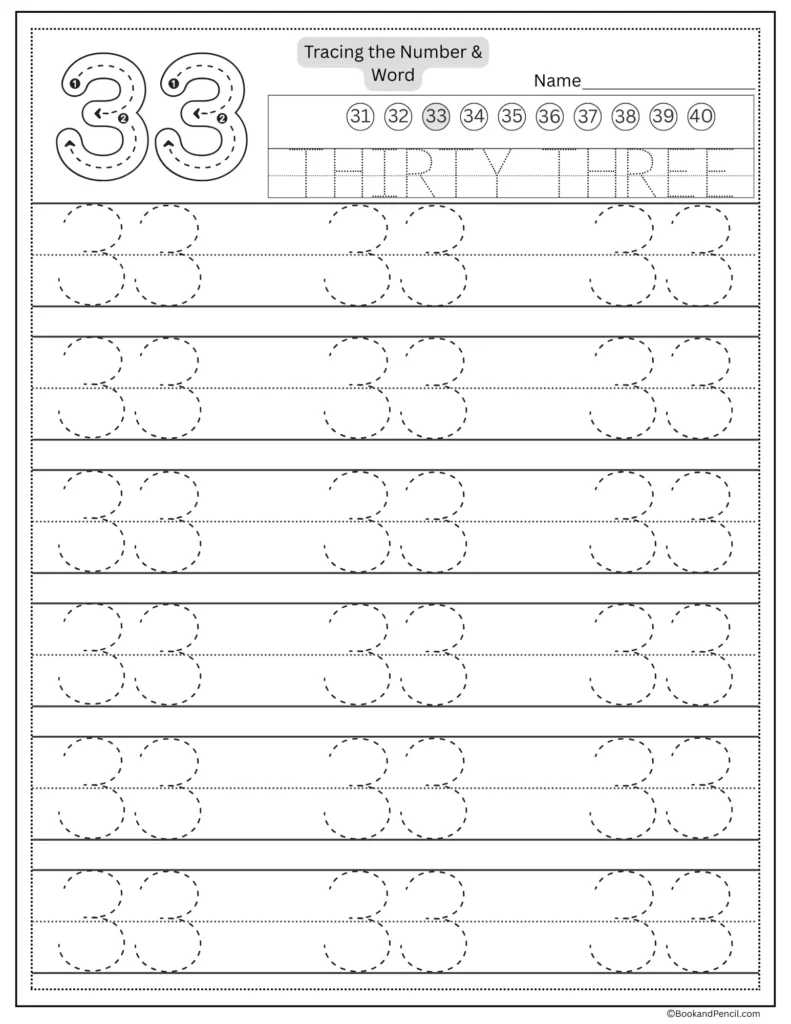
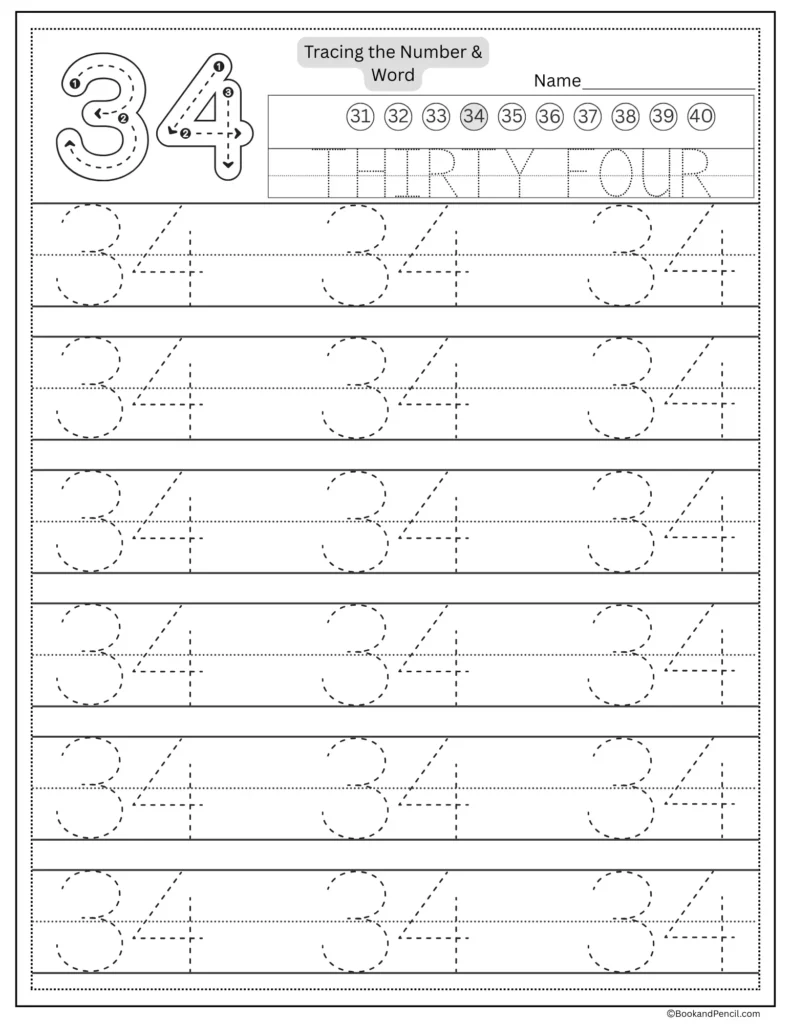
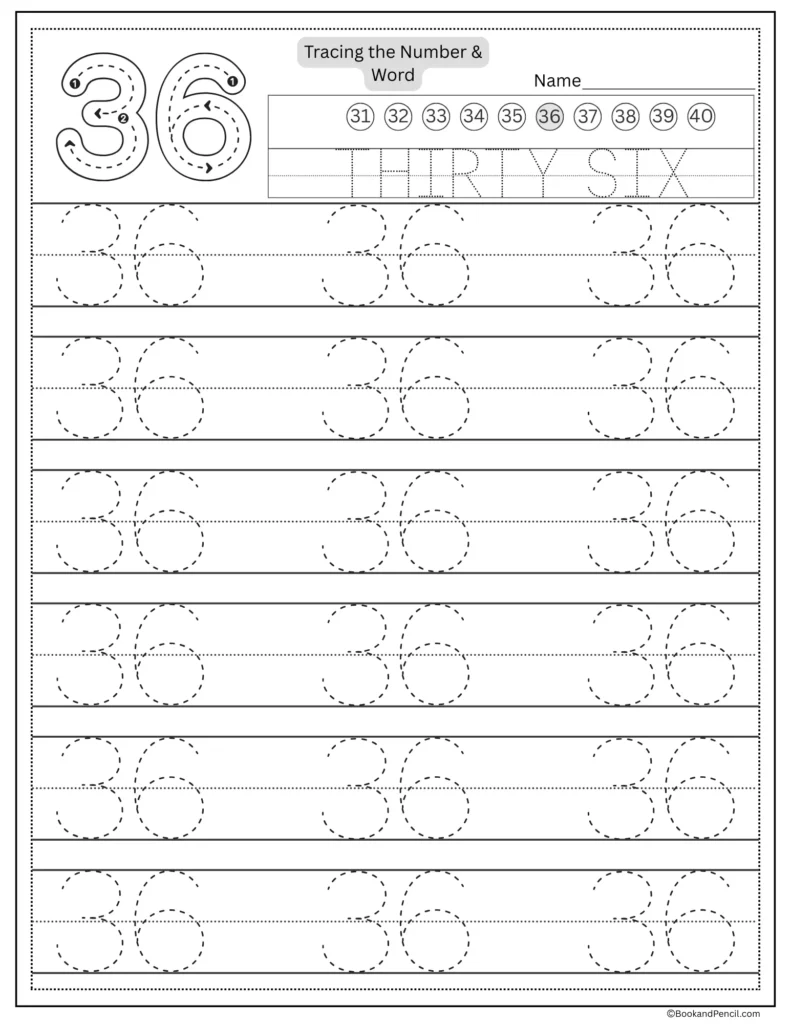
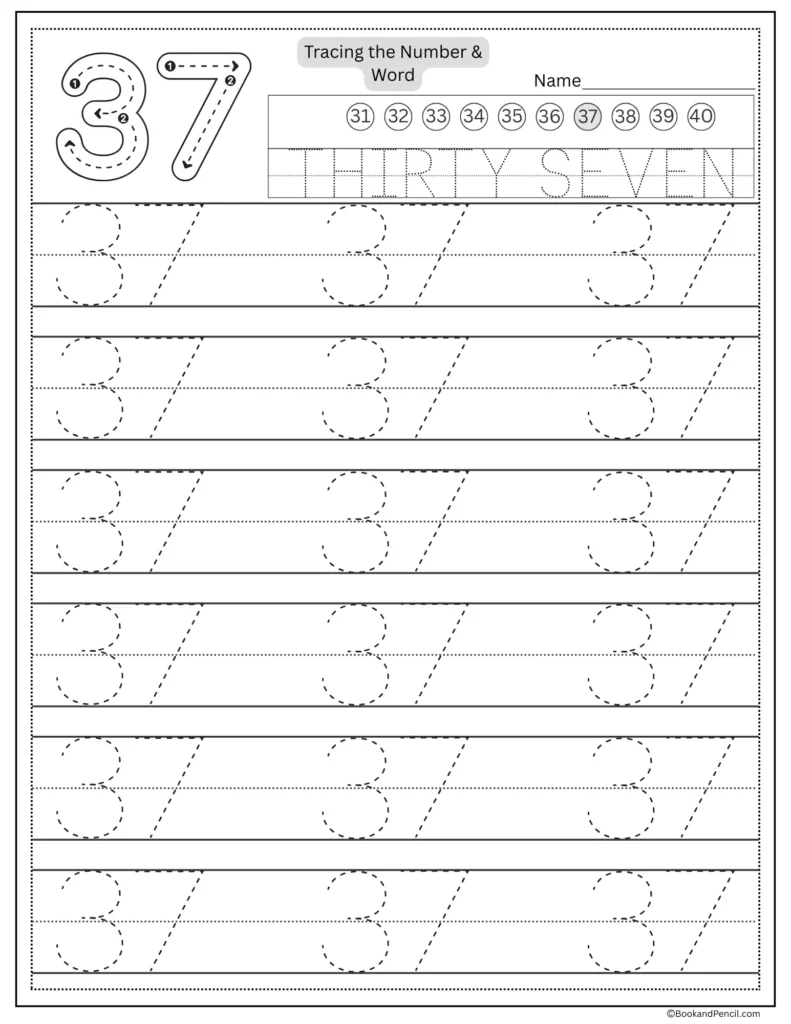
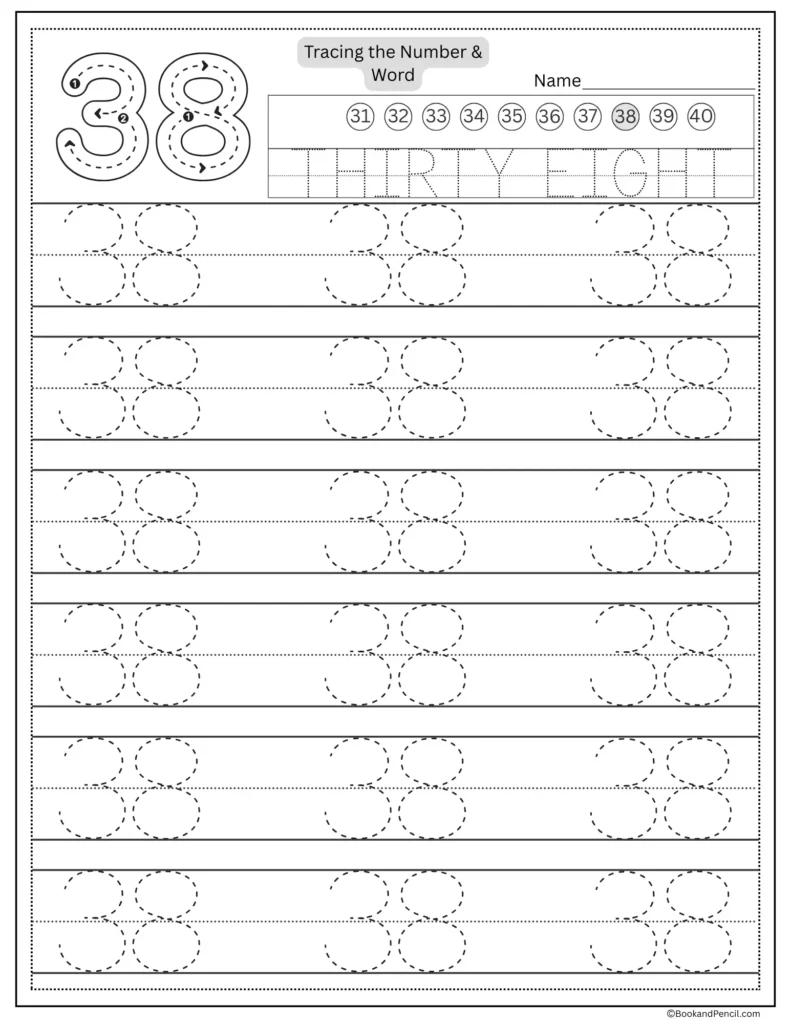
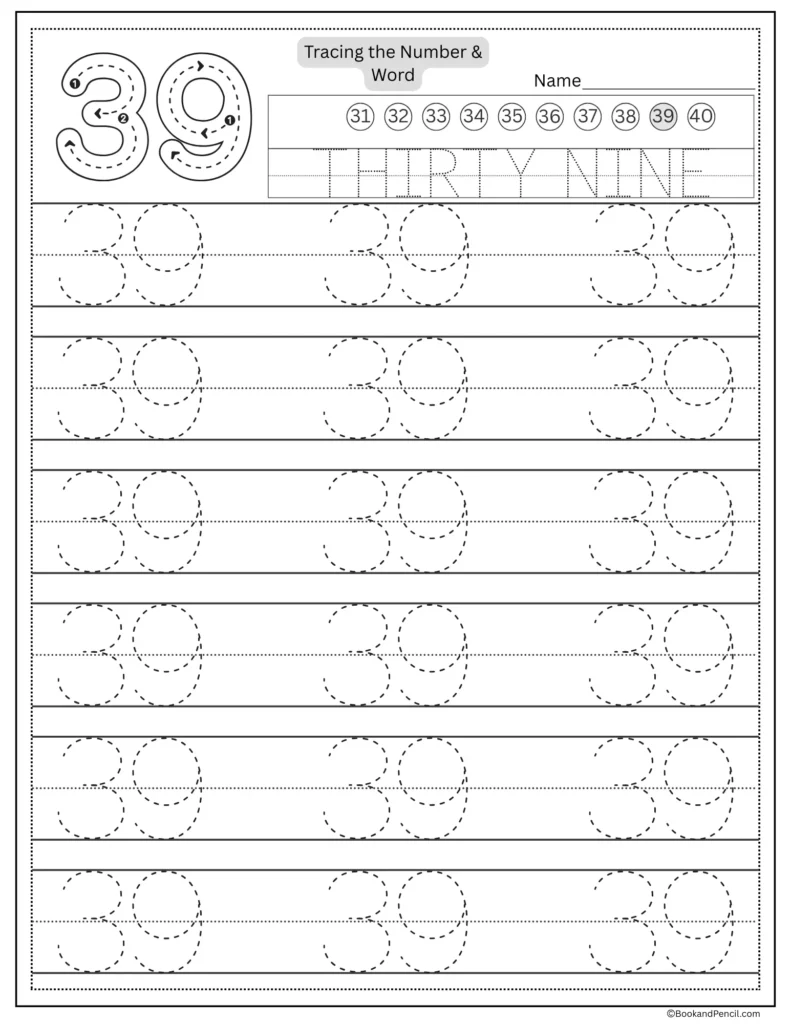
What's Inside Each Worksheet?
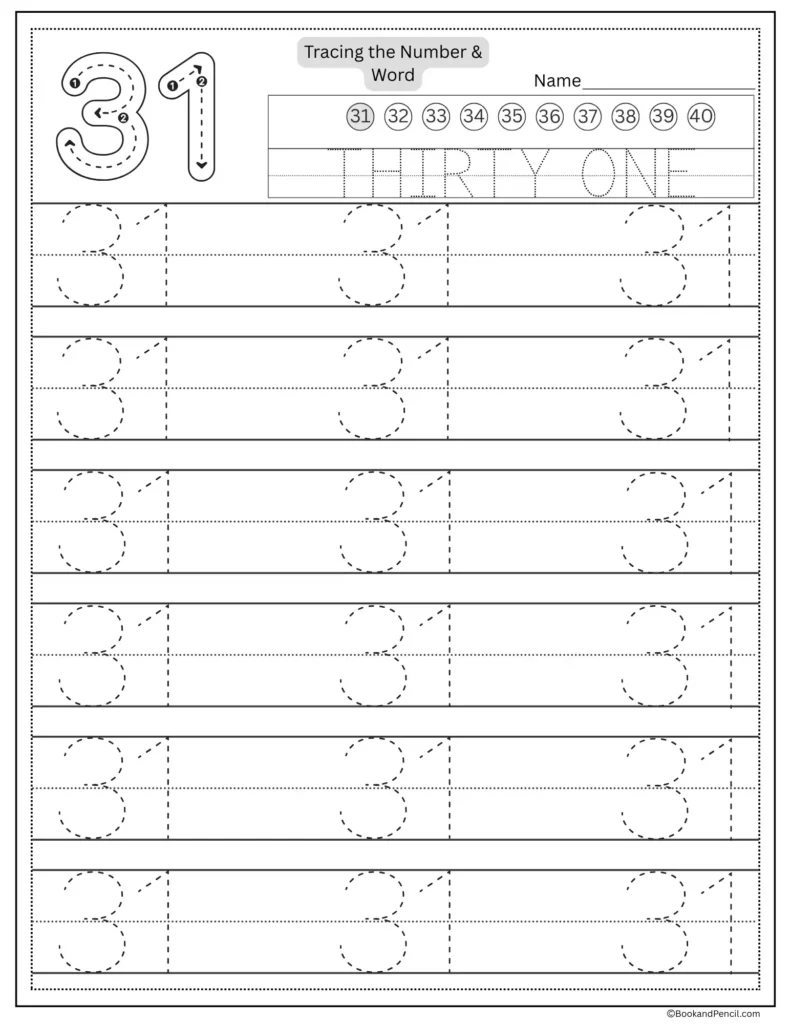
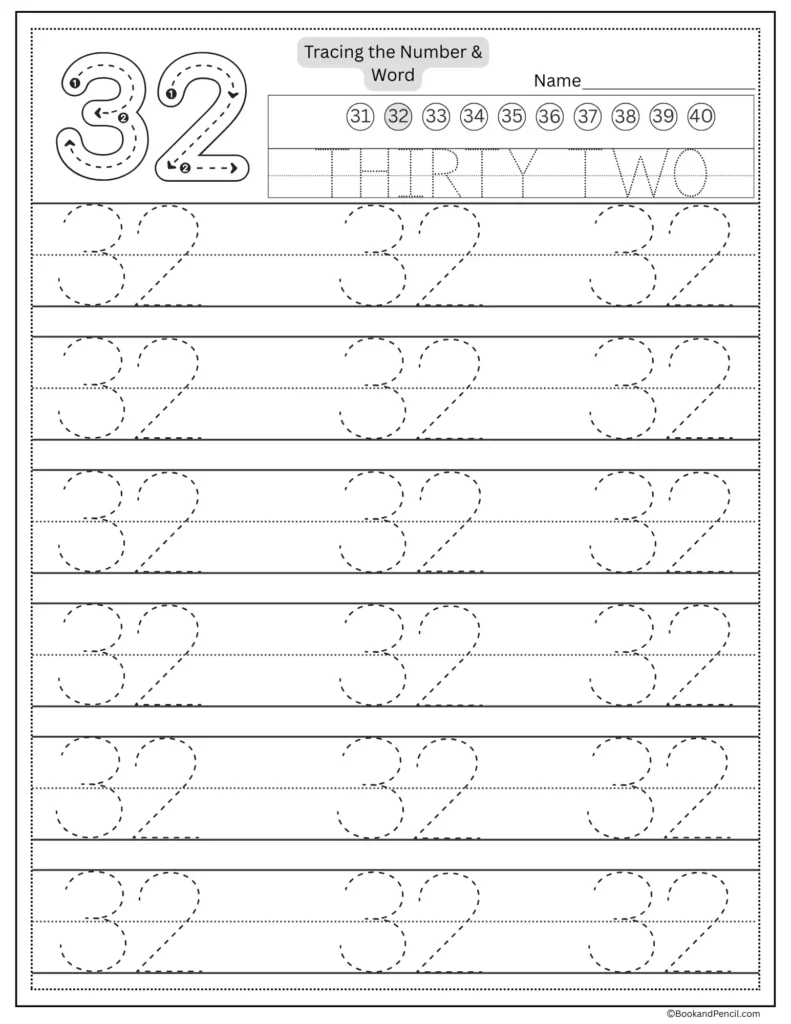
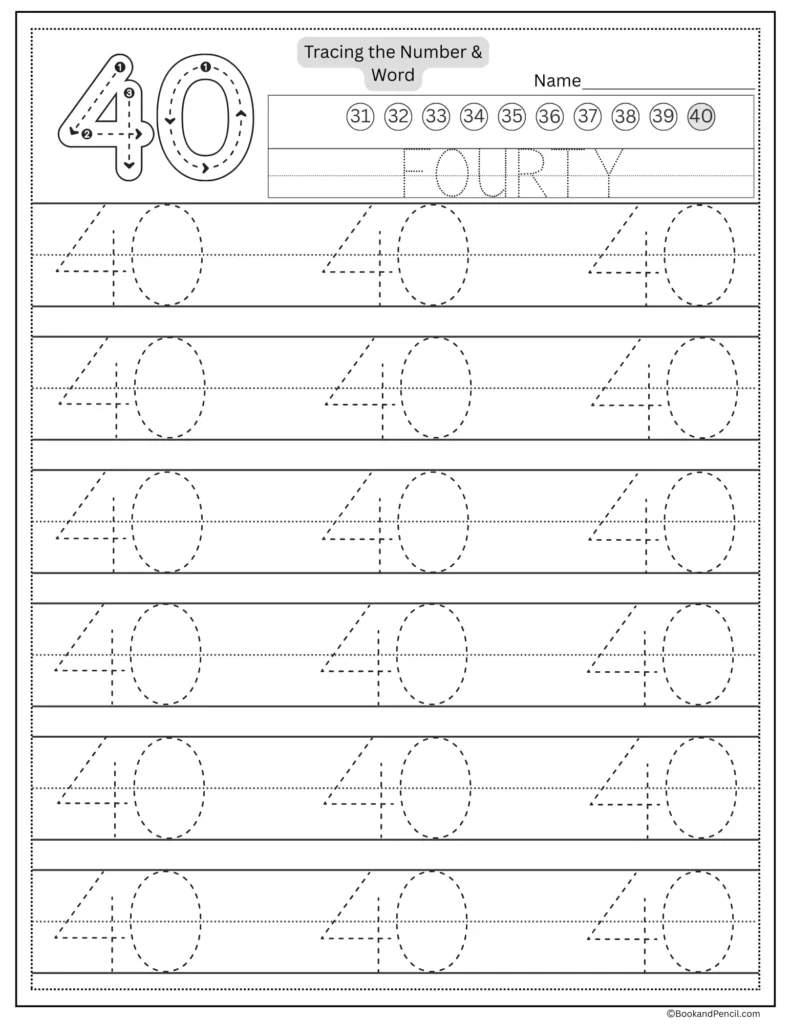
Using the number 40 worksheet as a detailed example, here’s exactly what children engage with across every page in this set:
① Three-Stroke Number Guide for “4” The large display number at the top-left breaks down the digit “4” using three numbered arrows — ①, ②, and ③. This is more directional guidance than any digit in the previous sets. Arrow ① draws the diagonal left stroke, Arrow ② adds the horizontal crossbar, and Arrow ③ completes the vertical drop. Children learn that the “4” is not one continuous movement — it’s a sequence of three deliberate strokes that must come together precisely.
② Single-Stroke Guide for “0” Right beside it, the “0” is shown with just one arrow ①, tracing a smooth oval in a single motion. This immediate contrast — a complex “4” next to an effortless “0” — helps children understand that not all digits require the same effort, building smarter writing instincts.
③ Full Range Number Strip: 31 to 40 Across the top, a clear number bar displays 31 through 40, with the target number highlighted at the end of the strip. Positioned at the close of the decade, this teaches children that 40 is a destination — the natural endpoint of counting through the thirties.
④ Word Tracing: “FORTY” Beneath the number strip, children trace the word FORTY in large dotted capital letters across a full-width line. Unlike the compound words of the twenties (“Twenty-One”) or thirties (“Thirty-Five”), “Forty” stands alone as a single root word — making this one of the cleaner word-tracing experiences in the entire 1–100 series.
⑤ Name Field A Name____ line sits at the top right, keeping the worksheet organized for classroom use and encouraging children to take personal responsibility for their work.
⑥ Six Rows of Repetition Practice The main body of the worksheet offers six double-lined rows, each containing three dotted “40” repetitions — giving children 18 complete tracing attempts per worksheet. Each row uses a solid baseline and a dotted midline, training children to keep their numbers consistently sized and properly seated on the writing line.
Why the 31–40 Range Builds Stronger Writers
Every number range in this series teaches something specific. The 31–40 set is where stroke complexity and writing discipline come together for the first time.
The digit “4” appears in 34, 40, and every number containing a “4” in the ones place. Unlike rounded digits such as 0, 3, 6, or 8, the “4” is built entirely from straight lines and angles — a real test of pencil direction and control. Mastering it here means children won’t struggle with it later when it appears inside larger numbers like 40, 44, or 400.
Meanwhile, numbers in the thirties (31–39) reinforce the same tens-digit pattern children began recognizing in the twenties — but now with the “3,” a digit that requires its own curved stroke discipline.
Together, this range delivers:
- Practice with the most stroke-complex digit in the 0–9 set (the “4”)
- Reinforcement of consistent tens-digit recognition (“3” throughout 31–39)
- A satisfying decade-close moment at 40 — motivating children to keep going
- Continued development of double-line row discipline for uniform number sizing
- Word tracing of a standalone number word (Forty) rather than a compound phrase